Truly a team sport, agility combines skill, training, and human-canine communication in a display that’s just as fun for spectators as it is for participants. If you’re looking for a way to bond with your dog, challenge their mind, or just burn off some of their excess energy, agility training may be the right fit.
What is agility
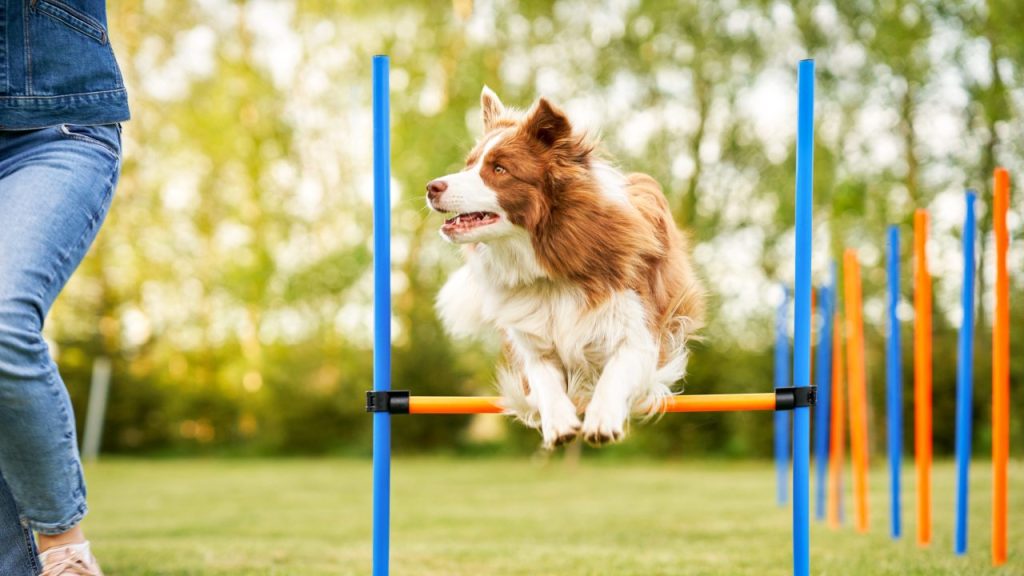
In agility competitions, a handler directs their dog through a sequence of obstacles — such as tunnels, hoops, weave poles, and seesaws — without ever touching the dog or the equipment. Using only voice and hand signals, they direct their dog through the course as quickly as possible with as few mistakes as possible. Competitions are held for dogs and handlers of all levels, ages, and sizes. Beyond the thrill of winning, dogs get a great mental and physical workout. Humans also get to improve their bonds with their dogs.
Is agility training right for my dog
While certain breeds seem to excel at agility, most notably Australian Shepherds and Border Collies, the sport can be enjoyed and done well by any dog. Competitions are usually divided by dog size, so your dog will only be competing against others close in size to them.
Even if you have no intention of ever competing, the benefits of agility are many. Two of the biggest are the intense mental and physical workout agility provides. As your dog masters particular moves and they hone their ability and athletic skills, they’ll become more confident. Additionally, agility training strengthens the bond between dog and human. As you work and play together, you’ll learn to read one another on a unique and deeply satisfying level, communicating well beyond basic cues such as “sit,” “stay,” and “down.” And most important of all, agility is fun!
Where to begin
Before starting agility training, schedule a check-up with your vet to make sure your dog is physically able to participate. Vets should carefully evaluate dogs of breeds prone to hip dysplasia, elbow dysplasia, or vision problems. You should consider your dog’s mental health as well; while agility training usually builds confidence, you want to make sure a shy or nervous dog is up to the task of performing. Lastly, your dog should be well-behaved around others. While they won’t be in direct contact often, no one wants an accidental fight to break out outside the ring.
Taking the next steps
When it comes to finding a place to train, you can look up facilities in your area. You will find agility classes of all levels in cities across the country, as well as private trainers who will work one-on-one with your dog. Search for a class that uses positive reinforcement to train and looks out for the safety of the dogs. However, if you have the space, you may want to purchase your own equipment or make some out of items you have around the house.
Usually, a pup must be at least a year old to participate in classes or competitions, but requirements vary. This helps avoid any excess stress on joints and bones that may still be developing.
Though it may not be right for every dog, agility training offers a plethora of benefits. Interested in other activities you can do with your dog? Check out some impressive tricks you can teach. Or, learn more about picking the right dog park.