The dog trainer's trainer

While Cesar Millan is dazzling TV audiences, Ian Dunbar has been quietly gaining the respect of dog experts and dog lovers everywhere.

Thursday March 31st, 2011

  • Share on Facebook
Square_140_dunbars_inside
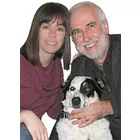
<p>Kelly and Ian Dunbar with Casey,<br />one of DogTime's <a href="/about-dogtime.html">office dogs</a>.</p>

Chances are you've heard of Cesar Millan, Hollywood's famous dog whisperer. In recent years, he's taken the world by storm, starring in National Geographic Channel's Dog Whisperer and putting out a variety of training books and DVDs. Millan's philosophy? We, as humans, must act as dominant pack leaders; our dogs should behave as submissive followers.

Chances are you haven't heard of Ian Dunbar, soft-spoken Northern California behaviorist. Rather than physical corrections and alpha rollovers, Dunbar advocates a trusting, less subservient relationship, treating dogs as companions and family members. Dunbar's training methods don't make for dramatic television, but watching him quietly train--without so much as wagging a finger--is riveting to anyone who has ever tried to teach their dog anything.

A different approach


Ian Dunbar has been winning over dogs, dog owners, and dog trainers for years with his accessible, effective positive-reinforcement approach. Talk with the most respected names in the dog training world and you discover Dunbar's impact is unparalleled.

"His contribution to this field is immeasurable," says Patricia McConnell, author of The Other End of the Leash, co-host of NPR's Calling All Pets, and founder of Dog's Best Friend Training. "Ian Dunbar created an entirely new perspective about dog training. He deserves tremendous credit for teaching us to be loving with our dogs and to have fun with the training."

Let's not get physical


Dunbar's hands-off, reward-based approach stands in contrast to Millan's dominance-based philosophy and physical corrections. He emphasizes that communicating with your dog is far more satisfying than dominating your dog and stresses that even children can use his positive reinforcement methods to become able trainers.

"Ian carried the torch for lure-and-reward training," says Sue Sternberg, founder and owner of Rondout Valley Animals for Adoption in upstate New York and author of Great Dog Adoptions: A Guide for Shelters and Successful Dog Adoptions. "He converted an entire generation of yank 'em, crank 'em dog trainers into better communicators."

Doctor, teacher, trainer


Raised on a farm in England, Dunbar's connection with animals formed early and undeniably. After attending the Royal Veterinary School in London, he earned his Ph.D. in animal behavior at the University of California, Berkeley, merging--what at the time were--two very discrete aspects of animal study: medicine and behavior.

For him the pairing was natural--and long overdue. "People don't bite their hairdressers or the ob-gyns," says Dunbar. "But biting's an issue for vets, so it's in our best interest to know a bit about behavior."

He moved to Berkeley in 1971 and later taught a dog behavior course, which was the first time he realized how hungry dog owners were to understand their own pets. Discouraged that he couldn't find a training course for his own young puppy, he started a school, Sirius Dog Training in 1981. (With 19 locations, it's become one of the country's biggest training centers.) Dog training was changed forever.

Groundbreaking ideas


He didn't know it at the time, but Dunbar introduced a concept so revolutionary he's credited with launching what is now commonly regarded as the modern era in dog training: Train puppies before six months of age--off leash (the way they live at home)--and use rewards rather than punishment to teach proper behavior.

Today, the notion that very young puppies can not only be trained, socialized, and handled, but that doing so actually prevents most problem behaviors from developing, is a founding truth of modern dog training.

"Ian Dunbar understood that problems up front lead to problems down the road and he pounded the podium talking about early socialization and enrichment," days Nicholas Dodman, author of The Well-Adjusted Dog: Dr. Dodman's Seven Steps to Lifelong Health and Happiness for Your Best Friend (Houghton Mifflin, 2008) and Professor, Section Head, and Program Director of Animal Behavior Department of Clinical Sciences at Tufts' Cummings School of Veterinary Medicine.

Building on success


The soundness of Dunbar's methods garnered worldwide attention and his techniques were embraced by trainers everywhere. In 1993 he founded the Association of Pet Dog Trainers, an international organization devoted to promoting human-canine relationships based on trust and respect. Along the way, he's written six dog training books and hosted the popular British television series Dogs with Dunbar.

In 1999, Dunbar met fellow trainer (and future wife) Kelly Gorman, cofounder and president of Open Paw, a nonprofit dedicated to keeping cats and dogs out of shelters and in loving homes. Though their techniques differ slightly, the Dunbars' philosophies towards dogs meshed perfectly. By 2000, they were living together in Berkeley, California as a family and married in 2004. Dogstar Daily, the online arm of Open Paw, was born shortly thereafter in February 2006.

Different methods for different dogs


At this point it's worth asking: With so much experience, and the respect and veneration of so many of the field's most renowned figures, why is Dunbar still relatively unknown and Cesar Millan a household name?

"Cesar works with aggressive dogs, and that's sexy these days," says Patricia McConnell. "But Ian's methods are successful for the average dog owner. What's more, they have been used by professionals for years to successfully treat serious aggression problems. And, they're fun."

With more families than ever bringing dogs into their homes, and more dog trainers embracing Dunbar's accessible, family-friendly techniques, 2008 may well mark the year that the "dominance mentality" takes a back seat to the reward-based training, which promotes understanding and living peacefully with one's pets.

"The biggest development in the world of dog training is that people are actually training their dogs, and the popularity of Cesar may be responsible for that," says Claudia Kawczynska, editor of Bark magazine. "But the fact is, people are enjoying training more and the amazing bond that develops through training, and that move toward positive reinforcement started with Ian Dunbar."

Related Content on DogTime.com
  • Finding a puppy: Picking the right breed of dog

    March 31st, 2011

    There are many things to consider when choosing a puppy, including which breed or type, and the optimal age of acquisition. Obviously, you want to choose a dog that is best suited to you and your lifestyle....

  • DogTime.com Launches Most Comprehensive Online Dog Breed Center

    March 31st, 2011

    SAN FRANCISCO, Calif., August 6, 2008-- DogTime.com (http://dogtime.com/), the premier destination for dog people, today announced the launch of its enhanced Dog Breed Center (http://dogtime.com/dog-breeds.html),...

  • Raising a puppy: Dealing with dog adolescence

    March 31st, 2011

    The prime purpose of puppy husbandry is to produce a friendly, confident, and biddable pup, so that you can face the behavior and training challenges of your dog's adolescence, and your dog can deal...

Anonymous User

Cesar's philosophy of calm assertive pack leader does not do any physical or emotional harm to the dogs. I have adopted his philosophy in the raising of my 2 dogs and they seem to be enjoying life even more now than their first 5 years of life with me. Only people here in the U.S. Are such hippies where they treat animals better than people. I love my dogs and want what is best for them, I see nothing wrong with cesar's techniques. When else have you seen a trainer that can control a pack 30-40 dogs? and most are powerful breeds. Positive reinforcement only gets you so far. Dogs are still dogs, they don't give each other treats for behaving when they are in the wild.

5 months ago by Anonymous

Nick

Who the hell thinks it's alright to beat a dog as part of training? You just hate it when "they don't listen"? What kind of an idiot are you? You don't belong owning am animal period!

8 months ago by Nick

Anonymous User

What's all this about? I don't think there's one 100% correct approach to raising a well behaved dog. You can learn from different teachers, like Cesar Millan himself shows us in his book "Cesar's rules" (that has a chapter on dr. Dunbar's method by the way). So be respectful to other opinions and waste no more valuable time you could have spend with your dog.

8 months ago by Anonymous

Anonymous User

LOL. This is a hoot. Let's see... You can be a pack leader without expressing physical dominance, when necessary? What a crock! Cesar explins what dogs do. If you want to be the pack leader, then it is impossible in some cases to be hands off. Dogs are a physical beast. This new age hippie approach won't work with dogs to the same level that Cesar's tactics do in the same way that the new age hippie approach to child-rearing has resulted in children and young adults who are self-indulgent with no direction, accepting everything without judgement and therefore being incapable of adequate judgement when it is necessary. Thank goodness we have Cesar to show us how to actually be pack leaders.

9 months ago by Anonymous

Recent conversations on these topics

  • Is it ok to beat your dog when training it?

    i just got a new dog and would like to know if beating when it does something bad is the only effective way to train it? ok if theres one thing I hate, its a dog that doesn't listen. If my dog starts doing something like scratching at a door, what alternatives are there other than yelling at it and hitting it? If I do that, then he'll associate me yelling at him with pain. Then hopefully the next time he does something bad and I yell at him, it will be enough So far, no one has really given any good alternatives. Also, gail, if I give the dog a treat everytime it stops scratching at the door, wouldn't it make him more likely to scratch at the door because he knows he'll get a treat when he stops?

  • Anyone heard of the Hotdoll for Dogs?

    This is too funny! Saw this on divinecaroline.com... "The Hotdoll is a doggy love doll that is supposed to help channel the sexual appetite of canine pets." The Hotdoll website doesn't appear to be ready yet but checkout the article and picture here:<a href="http://www.divinecaroline.com/article/33672/33237-hotdoll-dogs">Hotdoll Article</a> Doesn't the dog in the picture look satisfied??!!

  • Political Animals: Why Some Stray Dogs Have Joined the Greek Riots

    An interesting sociological phenomenon is taking place in the city of Athens. Some of the city's stray dogs are joining the anti-government demonstrators! <a href="http://www.psychologytoday.com/blog/my-puppy-my-self/201005/political-animals-why-some-stray-dogs-have-joined-the-greek-riots">Political Animals: Why Stray Dogs Have Joined the Greek Riots<a> LCK

  • Canine Communication, II: "Calming Signals" & the Mel Gibson Tapes

    Hi dog lovers! Check out my latest article on how dogs communicate, including input from Sigmund Freud, the Beach Boys, and the Mel Gibson tapes. Enjoy! <a href="http://ow.ly/2cxgt">Canine Communication, II: Calming Signals & the Mel Gibson Tapes<a>” LCK

AD

Good dog!

Many readers have asked for more in-depth information on Dr. Dunbar's training methods. Read about his approach and check out links to his videos below.

Dogs are social animals and absolutely thrive on social interaction, communication, and feedback regarding the appropriateness of their behaviors. Dogs need oodles and oodles of attention (and affection), so give it to them when they are good.

One of the most magically powerful training techniques is to ignore all unwanted behavior and instead, teach and reinforce good behaviors. Whenever your dog does something you like, simply say, "Good dog" and give him a piece of kibble, some affection, or play a game with him as a reward. For example, reward your dog whenever he sits, lies down, looks at you, stops barking, or just looks cute.

You especially want to reward your dog for any sociable or friendly greeting behavior, such as when your dog approaches, wags his tail, wags his butt, sticks out his tongue, raises a paw, or play bows. Sometimes your dog may look like he isn't doing much. But that's precisely the point! He may just stand there wagging his tail, but think of all the annoying and worrying things he could have been doing. He could have been barking, snapping, jumping up, or careening around your house like an agility course! So, in a sense, it's a good idea to reward your dog for not acting fearfully, antisocially, or hyperactively.

Even unwanted behavior offers a wonderful dog training opportunity. Reinforcing the cessation of misbehavior is the training technique of choice when trying to eliminate whining, growling, and running away. Punishment generally exacerbates the problem, making the dog more likely to whine, growl, or run away.

In addition to rewarding your dog for good behavior, proactively teach your dog to respond on cue. In matter of minutes, you can lure/reward train your dog to come, heel, sit, lie down, and rollover on command. Once you have taught your dog what you want him to do, motivate him to want to do what you want him to do by integrating many very short training interludes ("Sit. Go play.") into every enjoyable doggy activity and game, especially on-leash walks, off-leash play with other dogs, and games of fetch and tug of war.

As good behaviors increase in frequency, your dog will have less time for undesirable behavior. Nonetheless, there will be times when you will want to stop annoying or unacceptable behavior. There will be times when a prompt and reliable response is essential for your dog's safety, or your peace of mind. Always be instructive. Rather than punishing your dog for unwanted behavior, tell your dog precisely what to do. For example, tell him, "Sit." A well-trained sit-stay will prevent or stop most potential behavior problems. Practice prompt and reliable sits first indoors, where it's easy, and then in your yard, on walks, and eventually in the dog park. If your dog blows you off, don't give up. Calmly but repetitively insist that he sit. Your dog will soon learn that "sit means sit." Once you have taught your dog a lightening-quick sit and a bomb-proof stay, his quality of life will take a quantum leap.


Dr. Dunbar's dog training videos

With more than twenty books and DVDs, and hundreds of online videos at dogstardaily.com, there's plenty to pick from...

Lure/Reward Training Sit, Down, Stand & Rollover

Reward Training On-Leash Walking & Automatic Sits

Lure/Reward Training Off-Leash Heeling

Emergency Sits

Training Games

Help shelter dogs and puppies through Save a Dog on Facebook

Welcome to DogTime.com

DOGTIME LOGIN or SIGN UP

AD
AD