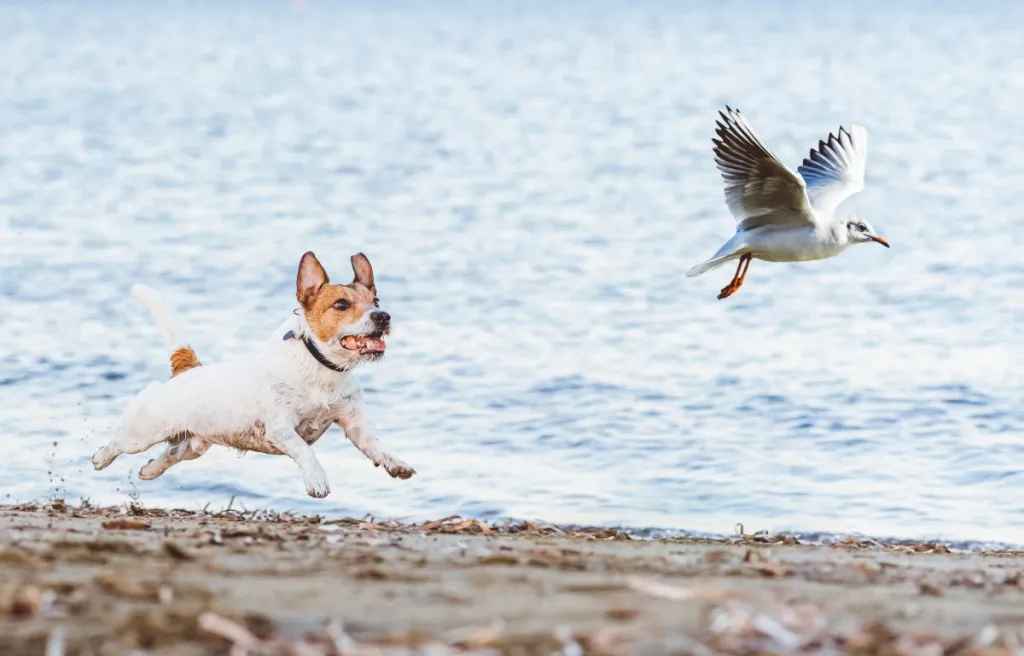
Cars, squirrels, cyclists, skateboarders, cats, and joggers — they’re all would-be targets. Any one of them could lure a chase-obsessive dog into a potentially dangerous situation. Chasing behavior can also trigger understandably hostile reactions. Some people might see it as aggression when a strange dog comes bounding after them.
Until you can keep your dog from chasing, keep them on a leash in public. At home, make sure your yard is securely fenced with no opportunity for digging under or jumping over.
Here’s what you need to know about chasing behavior in dogs.
Causes of chasing behavior in dogs
Almost all canines are hardwired to chase prey. Without that vital impulse, dogs in the wild would never have had a chance at survival.
Domestic dogs, of course, don’t need to hunt for food, but the instinct remains intact and manifests in some unlikely urges. What would a dog do with a ’97 Chevy if they caught one anyway?
Some breeds are naturally more prey driven than others. Greyhounds and certain types of terriers are notorious chasers. You must keep these dogs under control with a leash or a fenced-in yard. Make sure that yard is secure, especially if your pup is a known escape artist.
But all of that doesn’t mean that impulse control can’t be learned and sharpened.
How to treat the problem
Teaching a dog not to chase takes time and effort. Getting help from a reputable trainer is strongly recommended.
There are, however, steps you can take on your own:
- As with any behavior issue, providing plenty of mental and physical exercise reduces the need for your dog to find their own outlet.
- Present alternative means of release. Agility classes are both a fun and effective way to harness your dog’s intense desire to chase. Play fetch with them or toss a Frisbee, and reward them only when they chase appropriate targets. In other words, train them to recognize that the only acceptable prey is the one you throw.
- Teach them the command “come.” This improves impulse control.
- Continually add to their repertoire of tricks. The ability to respond to numerous commands helps improve impulse control, and it provides needed mental stimulation.
- Establish a no-fail cue word. That is, create a cue that signals to your dog that their very favorite treat is coming their way. Be prepared to deliver should the occasion demand it. For example, if stinky cheese sends them to the moon, cue the word “cheese,” using it only when the most high-value reward is necessary (i.e., they’re about to bolt and have ignored your command to “come”). Of course, in order for the cue to retain its holding power, you must deliver the reward any time they successfully respond.
How to prevent chasing
Establishing a strong foundation of obedience training is critical. Training creates a respectful pet. It also hones impulse control and reinforces their tendency to look to you for guidance.
Teach them “come” and “off” from the beginning, and make sure they’re well mannered both on and off leash. You should rely on a professional trainer if possible, especially if you’re not an experienced dog parent.
Also, take care to not inadvertently encourage chasing. For example, if your dog runs off with your slippers, don’t chase them. Participating in their game actually rewards the behavior.
The prey drive is an instinctual part of canine behavior. Most dogs love the thrill of the chase. But because the behavior can lead them directly into harm’s way, it’s important to treat it, if not prevent it altogether.
Early, comprehensive training and plenty of exercise are the two most effective tactics.