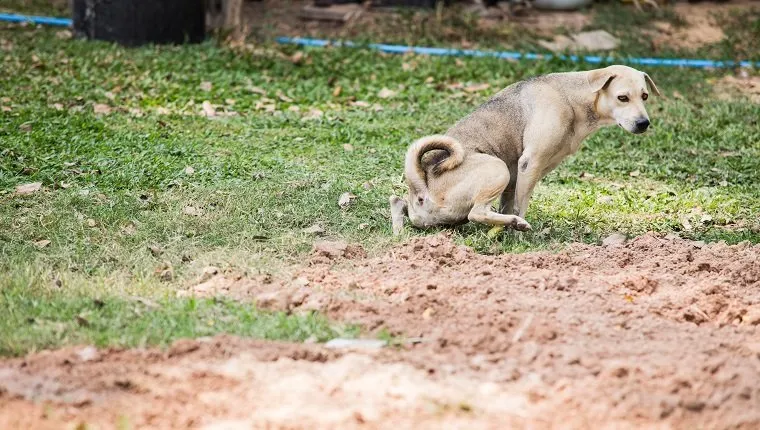
Constipation in dogs is the inability to pass stools normally and easily, which can lead to further symptoms. Most dogs pass stools once or twice a day, but constipated dogs may not defecate at all, they may strain while defecating, they may produce stools that are too hard, or they may pass mucus when trying to go.
It’s not uncommon, though, for a dog to go a day or two without having a bowel movement. As long as the stools are normal in size and pass easily, it’s not usually a cause for concern.
Most dogs suffer from constipation at some time or another. For some, it becomes a chronic condition, called obstipation, where dry, hard fecal matter is retained and becomes compacted in the digestive tract, preventing a dog from defecating at all.
Constipation in dogs should not be ignored, as it can lead to further complications and symptoms. Luckily, most cases aren’t serious and are easily treated with changes in diet and lifestyle.
Here’s what you should know about the symptoms, causes, and treatments for constipation in dogs.
Symptoms Of Constipation In Dogs
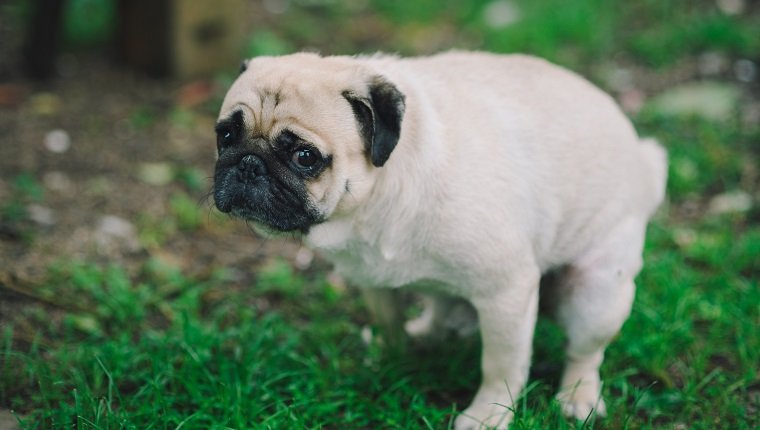
The most obvious symptom of constipation in dogs is a lack of defecation for two or more days. If you notice symptoms, it’s important to see your veterinarian to rule out other causes.
Additional signs you may see with constipation include the following:
- Crying, crouching, or signs of pain when attempting to defecate
- Hard, dry stools that feel like stone when you pick them up
- Straining to defecate
- Passing small, liquid fecal matter mixed with blood or mucus
- Grass particles, string, feces, or other objects in or around the anus
- Lethargy
- Vomiting
- Loss of appetite
Constipation may be a sign of a more serious condition, such as colitis, a urinary tract infection, an obstructed bladder, or an anorectal obstruction.
Before treating your dog for constipation, know that painful or strained defecation, passing blood or mucus, lethargy, vomiting, and loss of appetite could all be signs of another condition. This is why it’s so important to consult your vet.
You should also check for evidence that your dog has chewed splintery bones or other objects that may be sharp and cause internal perforations or obstructions. These can be very hazardous, and you must go to an emergency vet if you see that your dog has swallowed them.
Causes of Constipation In Dogs
The most common cause of constipation in dogs is a blockage of the digestive tract by an object that is not easily digested, like a bone, for example. This can also happen when dogs swallow grass, dirt, cloth, rocks, garbage, or even fur from too much self grooming.
Another common cause of constipation, especially in middle-aged and older dogs, is not drinking enough water. When your dog is dehydrated, the colon,which draws water from the waste passing through it, can overcompensate, resulting in harder feces that’s more difficult to pass.
Other causes of constipation in dogs include:
- Not enough fiber in the diet
- Worm infestation
- Lack of exercise
- Matted hair blocking the anus
- Enlarged prostate
- Kidney disease
- Hernia
- Tumors
- Central nervous system disorders or injuries
- Hyperthyroidism
- Stress or anxiety
- Medication to treat another condition
Treatment For Constipation In Dogs
Most simple cases of constipation in dogs are fairly easy to treat.
You should consult your vet before administering any kind of treatment to find out correct dosages of medication and to rule out other causes of your dog’s symptoms. The wrong treatment can make other conditions worse or cause unintended side effects.
Here are some treatments that are usually effective for simple constipation:
- Hydration
- Stool softeners such as Laxatone
- Mineral oil mixed with food to lubricate the colon
- Changes in diet, including more fiber
- Canned pumpkin or bran, high sources of fiber
- Metamucil, Benefiber, or another similar product
- Milk of magnesia
- Aloe Ferox
- Increased exercise
- Enema
In extreme cases, especially in the case of obstipation or chronic constipation, your vet may wish to manually remove impacted fecal matter or use medication to activate the colon or produce certain enzymes.
Rarely, a vet may consider surgery, usually for a condition known as megacolon.
Although most dogs will experience constipation sometime in their lives, prevention is fairly straightforward. Maintain a balanced diet and exercise, and avoid giving your dog bones or chew toys that can break off and cause obstructions.
Some dogs eat grass on occasion, but this should be monitored and minimized to prevent blockage. Make sure your dog stays hydrated, as well.
In male dogs, neutering can reduce the risk of constipation caused by prostate enlargement.
Has your dog ever suffered from constipation? What treatments did you find most effective? Let us know in the comments below!