Despite the fact that proper dog dental care is essential to good health in your pooch, statistics show that two-thirds of all pet owners do not take care of their pets’ teeth as recommended by their veterinarians. The unfortunate result of this lack of dental care is that 80 percent of all dogs have symptoms of oral disease by their third birthday. Because dental problems can affect other areas of your dog’s body, including the lungs, kidneys, and heart, it is essential that you care for your pet’s teeth right from the very start of his life. Here’s everything you need to know about dental care for dogs.
Understanding periodontal disease
Periodontal disease can become a major problem for your dog if left unchecked. The first sign of trouble is often acute “doggy” breath. So, if you begin to notice this issue, contact your veterinarian for a dental exam.
The first stage of periodontal disease is generally plaque, or a bacterial film on the surface of the teeth. In the early stages, plaque can be easily dislodged when you brush your dog’s teeth. It can also come off when your dog chews on hard toys or food. If the plaque remains on the teeth, the bacteria will attach to the teeth and calcify due to the calcium in your dog’s saliva. This hard surface becomes tartar, and more plaque will accumulate on top of it. Unchecked plaque can lead to gingivitis, evident by red, swollen, and inflamed gums that bleed easily.
Once your dog reaches this stage of plaque, it will take a professional cleaning to get the tartar off of their teeth and heal their gums. If the plaque is ignored, an infection can form around the root of the tooth. Progression will include the deterioration of the tissue surrounding the tooth, the erosion of the tooth socket, and a loose tooth. This process is just about as fun as it sounds, and can most definitely be painful for your dog. The good news is that regular dental care can prevent this entire nasty process from occurring in the first place.
Veterinary dental care
Your dog’s dental care should begin in the puppy phase of life. Your veterinarian should check your pup for a number of issues, including any missing teeth or unusual swelling. Once your pet passes through the puppy stage, your veterinarian will manage their dental care with regular examinations and cleanings. In the later years of your dog’s life, your vet will begin checking for plaque and tartar buildup that must be professionally cleaned, developmental issues, tumors in the mouth, and progressive periodontal disease.
Generally, your dog can get an oral examination during their regular checkup, but for cleanings, dogs often need anesthesia. Your dog may need a cleaning and more thorough examination of this nature every year, beginning at age 1 for smaller dogs, and at two years for larger breeds.
Common veterinary dental procedures
- A pre-anesthetic exam. This occurs before administering any type of anesthesia to your dog. This will ensure that your pet is healthy enough to handle anesthesia. The exam may include X-rays, urinalysis, blood tests, and an electrocardiograph. Sometimes a simple visual examination will be sufficient, depending on your dog’s age and physical condition. While there are always some risks involved with anesthesia, this exam can do much to reduce those risks to your dog.
- Anesthesia monitoring. This tracks your dog’s vital signs while they are under anesthesia. These important signs include your dog’s respiration, body temperature, and heart rate. This information ensures your dog is safe while under anesthesia.
- Dental X-rays. These images give your veterinarian a more comprehensive look at your dog’s overall oral health. Dental X-rays can help a veterinarian detect abnormalities in the mouth that may not be visible with a regular examination. While these X-rays may lead to the necessity of pulling loose or infected teeth, this process can be an important step in keeping your dog healthy.
- Scaling and polishing. These processes are similar to some you receive at your dentist’s office. The instruments used to get rid of the plaque on your dog’s teeth are like the ones that would be used on you. Your vet may also polish your dog’s teeth to smooth out rough areas and complete the cleaning process. The vet may apply a barrier substance, like fluoride, which will help prevent future plaque while strengthening your dog’s teeth.
Caring for your dog’s teeth at home
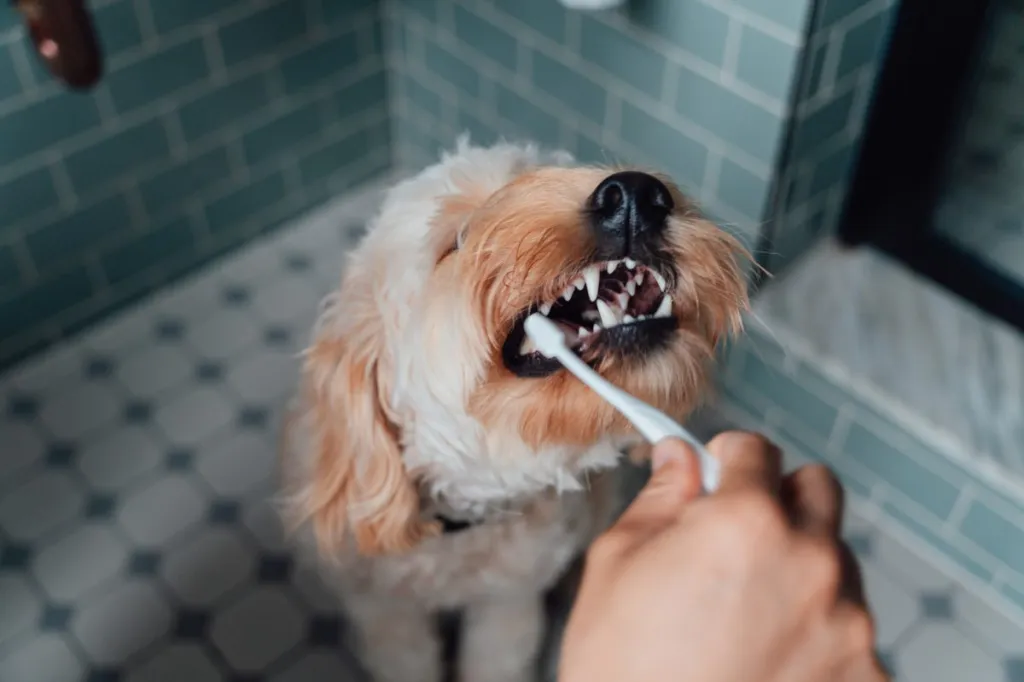
Taking your pooch to the veterinarian for regular dental care is only the beginning. It is important for dog owners to brush their pets’ teeth at home regularly as well. Special supplies for brushing canine teeth are available at many veterinary offices and pet supply stores.
By taking these simple steps to keep your dog’s teeth and mouth healthy, you will go far in keeping the rest of your pup healthy also. Some studies show that you can add up to five years to the life of your pet by adhering to a schedule for responsible dental care. Talk to your veterinarian today about how to keep your dog healthy, and happy, through routine dental care.