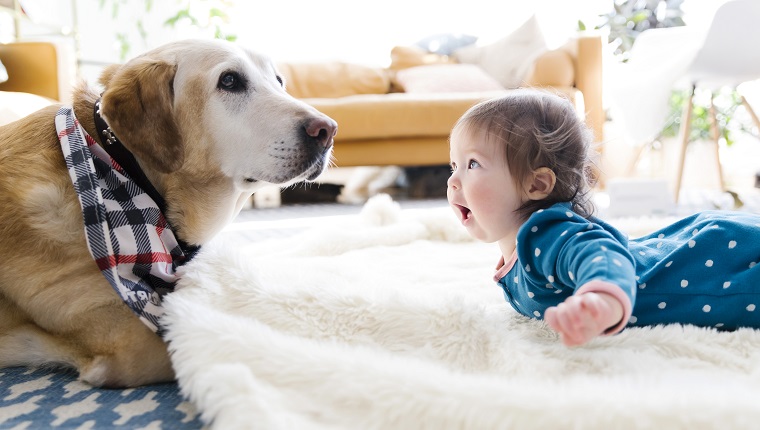
Are you a pet parent on your way to becoming the parent of a human child? Then you’re probably asking yourself, “What can I do to encourage a great relationship between my dog and new baby?
Excellent question! Just by asking, you’re taking steps towards success. There are many new life experiences ahead for you, your baby, and your dog. Preparing early on in your pregnancy can really help this transition flow smoothly.
Three areas of focus I find most helpful when expecting a baby are:
- Learning about your dog’s sensitivities and motivations
- Decreasing attention-seeking behaviors
- Defining and fine tuning manners and boundaries
Learn About Your Dog’s Sensitivity & Motivation
Learning about your dog’s sensitivities is critical when a baby is on the way so that you can plan and prepare for things that will be stressful or over arousing for your dog.
For example, if your dog is noise sensitive, then you should take that into consideration as you prepare. You may want to consider making a playlist of baby noises from YouTube and start playing it for your dog so they get used to the sounds they will hear in the future.
If your dog is reactive towards fast moving things or objects in motion, then you will want to plan accordingly as you bring swings and bouncers into your home.
You may want to place these in an area that’s off-limits to pets in your home. You can even set up a play area or room for your baby that’s for human kids only.
Taking into consideration your dogs triggers and responses, along with their motivators, is key in preparing for baby.
Decrease Attention-Seeking Behaviors
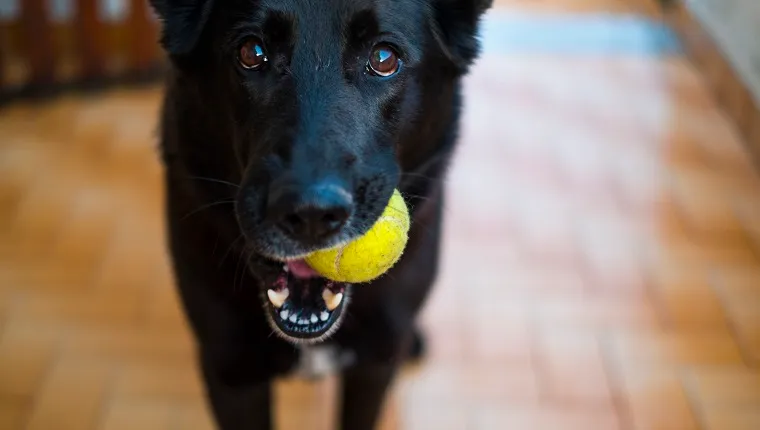
Attention-seeking behaviors, such as bringing over a soggy tennis ball as you watch TV each evening, may no longer be appreciated once you hold your newborn. In fact, it may lead to a less-than-friendly response from a new protective parent.
This can be confusing for dogs and often creates stress as they don’t know what to do to get the same attention they once did prior to baby.
Often this is when the dog tries all that has worked before and even resorts to receiving negative attention from their family. The family then interprets this as the dog is jealous or being spiteful of the baby.
No, it’s just that what worked for the dog in the past no longer works now, and they’re desperately trying to engage with their people at all costs, even if negative.
You may want to experiment with a pet sitter, dog walker, or doggy daycare to help your dog get attention and expend some energy. That way, when baby comes and you don’t have time to properly exercise your dog, your pup can still have an outlet for their needs and wants.
Practice Manners & Boundaries Before Baby Arrives
Assessing attention-seeking behaviors and eliminating or altering them prior to baby’s arrival makes life less stressful and enjoyable for all.
Dogs are most successful when they know what is expected of them. Defining and teaching boundaries and manners prior to baby’s arrival allows families to include their dog in everyday baby routines.
This constant inclusion allows the dog to develop and maintain a familiarity and bond with the new baby, increasing safety and harmony for all.
Train your dog for any behaviors that they might need to curb before the baby arrives. For example, teach them not to jump up, to back off or “leave it” on command, and to respect limits on play time or attention.
Preparing Is About Inclusion & Safety For Baby & Dog
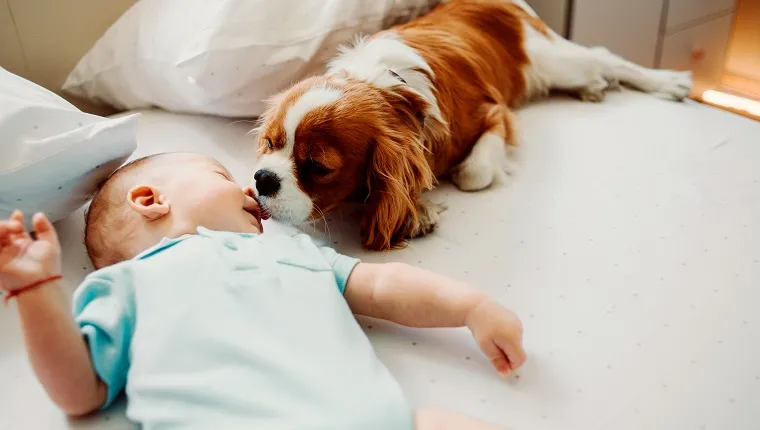
Learning your dog’s sensitivities, decreasing attention seeking behaviors, and defining and teaching boundaries and manners are three great ways to prepare you and your dog for life with baby.
I feel these are the most important ingredients to a successful and life long relationship. Taking steps like these will allow you to include your dog, with full supervision, in daily baby care routines.
This makes life interesting and allows your dog to become familiar with your baby as they grow and develop.
Families that do not prepare often feel overwhelmed and seclude their dogs, preventing this critical bonding through familiarity. This can lead to a sad existence for the dog, a decrease in safety between baby and dog, and a potentially unhappy ending.
Thank you for choosing to learn more about preparing you and your dog for life with baby. You have much to look forward to!
Have you ever introduced your dog to a new baby? What advice do you have for expecting parents who want their dog and baby to live peacefully together? Let us know in the comments below!