Question:
How do I stop my dog from pulling on the leash?
Answer:
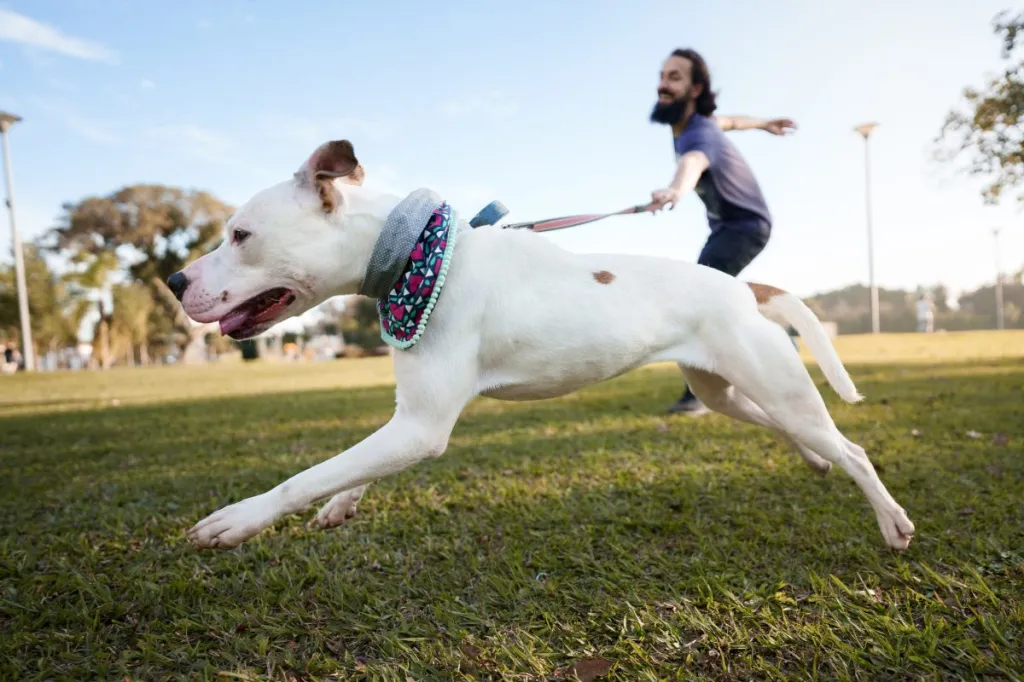
Pulling on a leash is a behavior almost all dog parents encounter. The best way to stop it is to make a promise to yourself and your dog that they will never again get anywhere by pulling on their collar. Period!
How to respond when your dog pulls on the leash
When your dog starts to pull (meaning the leash line from your dog’s collar to your hand is taut), stop, call your dog’s name, and back up a few steps until they return to you — or at least move in your direction. You can then reward your dog by moving forward again or by turning around and going in a new direction. Give your dog a few small treats for returning to you and don’t forget to praise them.
This takes patience — and lots of it. For the first couple of weeks, your dog is likely to pull every step or two — as they have always done — but this time it’s going to get them nowhere. That means you may not get very far on your walks. You may even cover the same half block over and over again as you back up, ask your dog to focus, turn, and walk in a new direction. Remember to keep praising your dog as they get better at walking by your side: “Yay! You’ve gone nine steps without pulling! Good dog, here’s a treat!”
Tips for leash training
A couple of tips: when you train, use a regular flat-buckle collar and a 4- to 6-foot leash, thin enough to hold comfortably in your hand. Do not use a “flexi” leash. Those leashes actually train dogs to pull by teaching them that tension on their necks gets them farther.
Additionally, keep a log to track your progress. Did you get two steps this time without pulling? Ten steps? A half a block? Progress feels slow at first, but keeping a log will show you how far you’ve really come (and help you to notice when you’ve forgotten to train).
Practice makes perfect
You won’t be covering a great distance during loose-leash walking training, but it’s important that your dog still get plenty of exercise. When you want to take your dog out for a run or playful romp, use a harness instead. That way, your pup knows the rules are different. While wearing a harness, they’re free to run, chase a tennis ball, sniff a tree, or whatever!
However, the minute your dog’s leash gets clipped back onto the regular collar, you’re back to the no-pulling rule — and that rule can’t be broken. Consistency, practice, and praise will get you where you want to be…and your dog too!