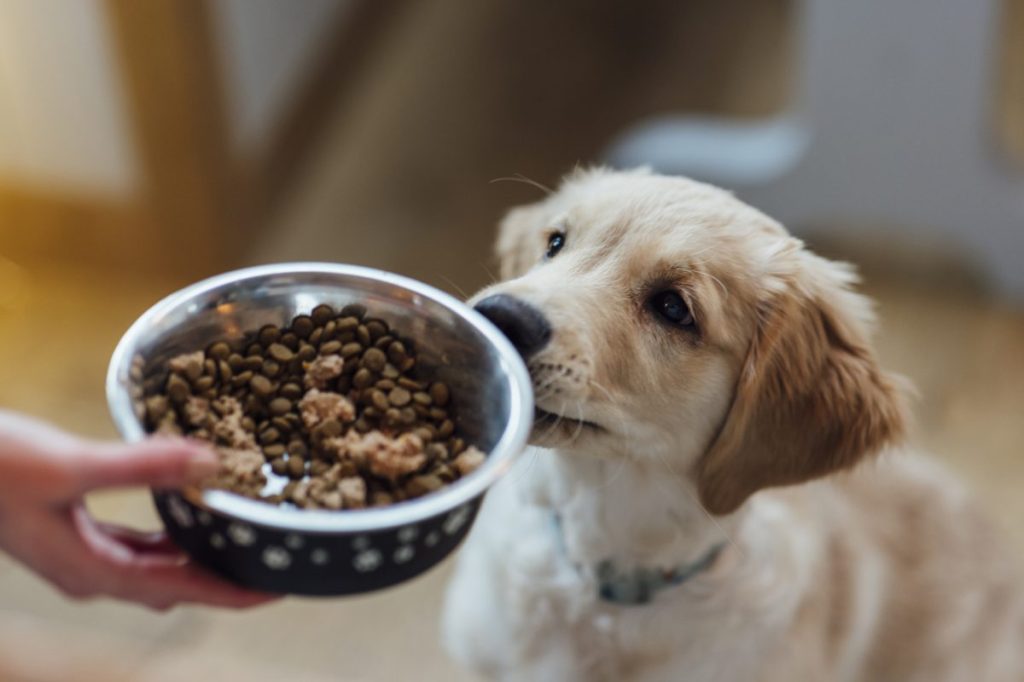
Dogs need fats?

Thursday March 31st, 2011

  • Share on Facebook
Question:

Is fat important to my dog's health and, if so, what's the best kind?

answered by Kymythy Schultze

Answer:

Dietary fat is the most concentrated source of energy for the dog. It also provides essential fatty acids and aids in nutrient utilization and transportation. Fat is involved in cell integrity and metabolic regulation. So, yes, fat is important to your dog's overall health!

Saturated fat is found primarily in animal sources while polyunsaturated fat is found mostly in plant sources. Saturated fat provides greater energy for the dog than carbohydrates. In fact, as long as the diet provides sufficient glucose precursors (amino acids, fats, etc.), dietary carbohydrates are not needed for growth and maintenance.

Fats (and oils) are composed of fatty acids, sometimes referred to as vitamin F. Fatty acids are found in both animal and plant sources. The two types of essential fatty acids (EFAs) most recognized as important to canine health are omega-3 and omega-6. Omega-3s include alpha-linolenic (ALA), eicosapentaenoic acid (EPA) and docosahexaenoic acid (DHA). Omega-6s include linoleic acid (LA) and gamma-linolenic acids (GLA). Trans-fatty acids, dangerous free radicals, are formed when unsaturated oils are exposed to heat, light, or oxygen. Omega-3s are the most sensitive and are often deficient in cooked or processed pet food products. Thus, some dog guardians choose to add supplemental Omega-3 oils to their dog's diet to replace those that have been destroyed during heat processing.

There are many types of oils available, but most dogs do best on one from an animal source such as fish oil. There are plant sources of omega-3s, but some dogs do not make the conversion within their bodies that is needed to make the plant form usable. If you choose to add EFAs to your dog's food, please remember to choose the highest quality available. The oil label should state that it's been tested free of heavy metals, PCBs, and other contaminants. Even though fats and EFAs are important to good health, too much can put a strain on organs such as your dog's liver and pancreas. Avoid cooked fats (grease) or poor quality products. And remember that a little goes a long way!

Kymythy Schultze has been a human and animal nutritionist for over two decades, helping people and pets live happier, healthier lives.

Read more about Kymythy Schultze in the DogTime expert center...
Related Content on DogTime.com
  • Arthritis and the aging dog

    March 31st, 2011

    The signs of arthritis may be hard to spot. You might notice it takes Fido a little longer to get up in the morning and she seems to have a harder time moving around. Soon you realize that she's in...

  • Choosing the right dog treats

    March 31st, 2011

    Treats are a great way to show your dog a little extra love. These special yummies can be anything from homemade biscuits to a package from a doggy bakery, or even just a morsel of steak from your...

  • Your dog can have allergies, too

    March 31st, 2011

    Do you find yourself sneezing at a particular time of year? Does a particular material cause you to have a reaction when it comes in contact with your skin? Did you know that your dog can suffer from...

No comments about this page yet. Be the first!

Recent conversations on these topics

  • Senior dog is losing weight

    My 13 year old shepard mix is losing weight. Its really become apparent the past few days. Of course I will be bringing him to the veterinarian, but I am wondering what suggestions people have for stimulating appetite and weight gain in an older dog. As a puppy he had serious digestive problems and needed to avoid the usual culprits (corn, wheat, soy). He has been eating Canidae All Life Stages supplemented with small amounts of healthy people food almost all his life. He is a self feeder and has always maintained a healthy weight. He has taken a very low dose of phenobarb for seizures the past 5 years and Rimadyl for arthritis the past 6 months. I really like Canidae (another dog of mine lived to 17.5 years so obviously the food is good). I also have a 1 1/2 year old lab mix at home and what I feed one is likely what I will feed the other. I am considering cooking food for my old guy, giving him more of our food, or adding canned Solid Gold (the canned Canidae seems to upset his tummy---not sure why). Suggestions?

  • dogs LOVE these healthy dog treats!

    Thanks for sharing, Jean! That does look like a good and healthy recipe for tasty treats. I'll be sure to try it for my dog. Thanks again!

  • Help

    I feed my dogs home made food, but I occasionaly give them kibble. I used to feed Merrick dog food, but they revised their products and they now contain more fish. Lady cannot eat fish because it makes her sick. Most of the healthful brands seem to contain fish. Does anyone know of a good dog food that has little or no fish?

  • Picky eater

    I am having trouble getting Cooper to eat. It is not that he is sick, he just hates what I feed him. The only food he will readily eat is meat, but he sometimes does not even like that. I cook for my dogs, and I have never seen a dog besides him turn his nose up to a good homecooked meal. How do I get him to love food?

Welcome to DogTime.com

DOGTIME LOGIN or SIGN UP

AD
AD