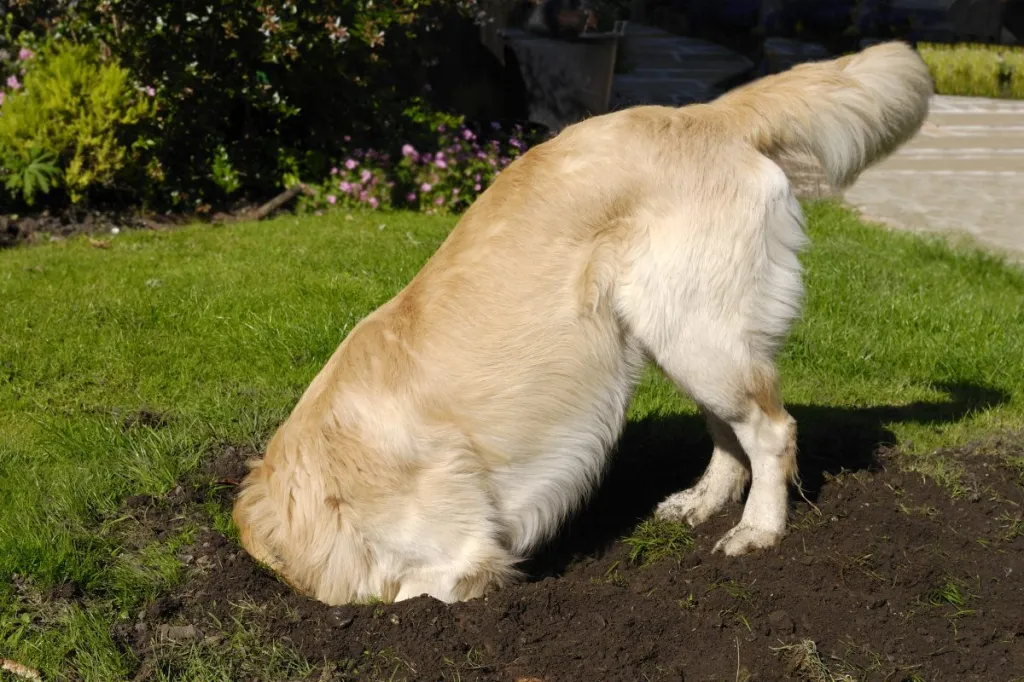
As any dog parent can attest, the sight of a furry friend enthusiastically digging up the earth can be both endearing and exasperating. From meticulously crafted burrows to seemingly aimless holes, the act of digging is an innate behavior deeply embedded in the canine psyche. There’s much more to a dog’s digging habits than meets the eye (or the eyesore that used to be your yard). We’re going to give you the dirt on dogs who dig and help you better understand — and stop — this behavior.
Why dogs dig
There are many reasons why dogs dig. Let’s delve into a few of them!
Breed
Different breeds dig for different reasons, so before looking for solutions, it’s important to establish why your dog digs. Heavy-coated spitz-type dogs, such as Huskies and Chow Chows, dig during hot weather to create pits to help them stay cool.
Earth dogs — those bred to dig tunnels to get at their prey, such as short-legged Terriers and Dachshunds — are following their instincts to find gophers, moles, or other burrowing rodents.
Scent hounds (such as Beagles, Bassets, and Bloodhounds) and unneutered males of any breed often dig under fences to get at small game (like squirrels), food, or a female dog in heat.
The common trait for all of these breeds is that they dig because they find it gratifying.
Boredom
Boredom is a common culprit behind digging. When there’s nothing to hold your dog’s attention, they may fill their time by digging up the yard. Why? For the same reason people climb mountains: because they can! Digging fills the void when your dog is sitting around outside, waiting for you to return. Boredom often afflicts adolescent dogs, but it can happen at any age. Sometimes lack of socialization can trigger this behavior.
Youthful energy
Juvenile dogs (age 6 to 18 months) may dig because they’re full of youthful high spirits and have nothing else to do. When left alone outside, dogs have the motivation, means, and the chance to dig. Understandably, they take advantage of it!
How to discourage digging
There are two choices available to the frustrated dog parent. One: take away the reasons to dig. Two: redirect the digging to an acceptable place. If your overheated Husky is digging cooling pits, keep them inside with the air conditioning on during hot days, or fill a small kiddie pool with cool water for him. If your Terrier is tearing up your lawn looking for gophers, bring in a professional to get rid of them. And if your unneutered male dog is digging under the fence to hunt for the ladies, neuter surgery is in order. Neutered males lose often their urge to leave home in search of adventure.
Boredom can be overcome by keeping your dog active both mentally and physically. Training your dog how to behave when they’re alone can help, but keep them indoors until they demonstrate they’re OK outside.
When you both are outside, play, go through training commands, and do other activities together. Hiding treats in the yard can be a fun game for your dog. Be sure to go for a walk together when you get home. Socialize your dog by getting together with others in the neighborhood at a dog park or on walks. When your dog is kept busy and mentally stimulated, they’ll be less likely to turn to digging.
You can discourage digging along your fence line using chicken wire. You will need a length of 5-foot-wide wire as long as your fence line. Dig a trench, 1/2 to 1 foot deep and 3 feet wide at the fence line. Attach the wire to the fence about a foot up from the bottom rail. Bury the remaining wire in the trench. When your dog digs down to the wire, they should stop.
When digging doesn’t stop
There are some dogs who will continue to dig no matter what you do to stop it. Earth dogs, for example, have an overwhelming urge to dig that is bred into them. A solution for your yard and your dog is something called a digging pit, a specific area where your dog can satisfy their urges to their heart’s content.
You can build a digging pit yourself in less time than it takes to mow your lawn. Survey your yard and pick a spot where it would be OK for your dog to dig. Place stones or bricks around the area to be used as a sight cue for training. Turn over the soil a bit, and mix in some sand to keep it loose and to improve drainage.
For training, start by burying a toy, chewy, or treat to induce your dog to dig in the pit. Bring your dog outside and persuade them to dig in the pit. Stay with them the next few times you go out to be sure they continue to dig where you want them to. Use praise and rewards when your dog does it right. Correct and direct your pup to the digging pit if they try to dig anywhere else. Keep your pit full, and add a toy or chew to keep your dog interested.
Whether a digging pit, training and re-directing, or fence guards help curtail your pooch’s digging ways, your family and yard will be happier for it.