May is Lyme Disease Awareness Month, which means ticks are on our minds — but hopefully not on our dogs!
Lyme disease is spread by ticks who carry and transmit bacteria through their bites. It’s one of the many reasons we pet parents need to know how to find ticks and remove them from our pups.
As tick season is already underway in most of the United States, we should check our dogs whenever they spend time outdoors. Lyme disease isn’t the only nasty thing ticks can spread. Rocky Mountain spotted fever, tularemia, and anaplasmosis are just a few of the other conditions dogs can get from tick bites.
So how should you check your dog for ticks? And what should you do if you find one? Here’s a guide to catching these bloodsuckers in the act and what to do if they bite your dog.
How To Check Your Dog For Ticks
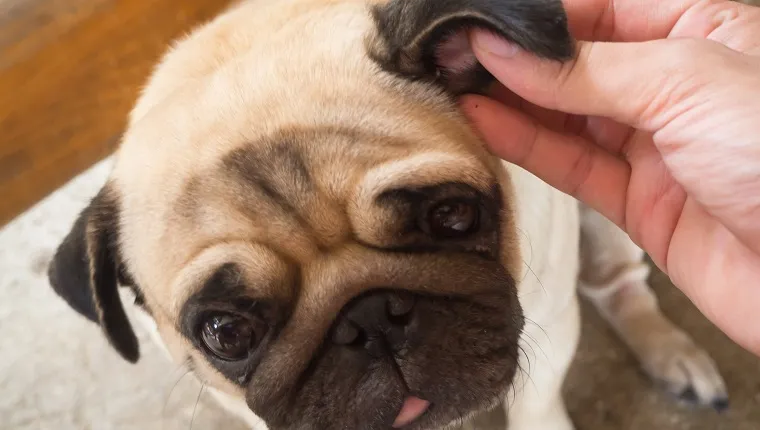
During tick season — which is spring and summer in some places, but can be year-round in milder climates — give your dog a tick check after every walk outside in brush or woods. It’s a good idea to don latex gloves before, since you can catch diseases if you come into contact with the tick’s fluids.
Run your hands over your dog’s body, feeling for pea-sized lumps. If you feel something, spread their fur so you can get a close look at the skin.
Ticks can attach anywhere, but common spots are the ears, head, neck, shoulders, groin, and between the toes.
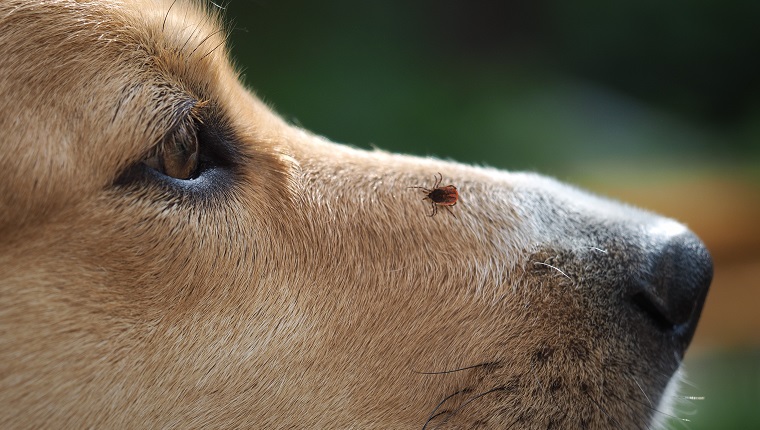
What you’re looking for: Tear-shaped bodies with eight legs. Before a meal, they can be as small as a sesame seed or, when engorged with blood, about as large as a pea. They can be brown, black, tan, or reddish.
Here’s an in-depth guide to tick season and which kinds of ticks you might expect to see where you live.
How To Remove Ticks From Your Dog
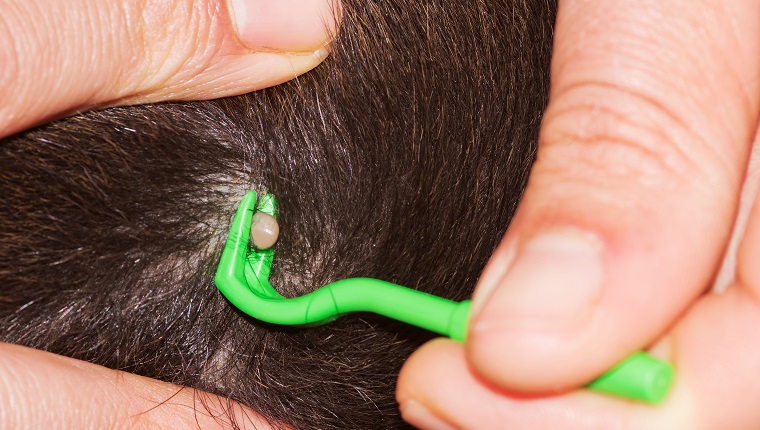
To remove the tick, you’ll need tweezers — fine-tipped tweezers work best — or a tick removal tool. There are some highly-rated tick removal tools on Chewy if you don’t want to use your everyday tweezers on yucky ticks.
- With the tweezers or tool, grasp the tick by its head or mouth parts, as close to your dog’s skin as possible. Don’t grab the tick’s body or squeeze; this can make the tick expel disease-carrying fluids.
- When you’ve got a grip on the tick, pull straight back, steadily and firmly. Don’t squeeze or twist as you pull.
- Drop the tick into rubbing alcohol to kill it. These hardy bugs can survive being flushed down the toilet or drain. Squeezing the tick with your fingers isn’t recommended, as the fluid that comes out can cause diseases.
- Clean the bite area with a cotton ball dipped in rubbing alcohol. You may want to follow it up with a dab of antibiotic ointment.
Don’t worry if the tick’s head is still attached to your dog; it will probably come out on its own. Keep an eye on the area, and if you see signs of infection, visit your vet.
DO NOT try to squeeze the tick off with your fingers or apply burnt matches, petroleum jelly, and the like. These tricks can make matters worse by irritating the tick, causing it to expel disease-carrying fluids — not to mention the danger of burning your dog with a match.
Have you ever found a tick on your dog? What’s your best technique for removing them? Let us know in the comments below!