Arriving in new locales can feel glamorous and exciting. That notwithstanding, let’s face it: getting there is rarely half the fun, especially when you’re flying with dogs. Airport lines, security checks, delayed connections, and airplane air and noise are stressful enough for people. For pets — who can’t check the departure monitors or talk to the gate agent — it can be even more confusing and anxiety-provoking. Long international flights add extra burdens.
Consider alternatives to flying with dogs
Because air travel can be so unsettling for dogs, and especially puppies, you would be wise to find alternatives to commercial airline travel for your pets. This is especially true for dogs traveling as cargo. Regardless, it also applies to small dogs who could go in the airplane cabin.
Unfortunately, sometimes flying with dogs is inevitable. For those occasions, a little advance planning is the key to your dog’s comfort.
Preparing your dog for cargo travel
These tips will help you make sure your pup is as safe and comfortable as possible during every phase of the journey:
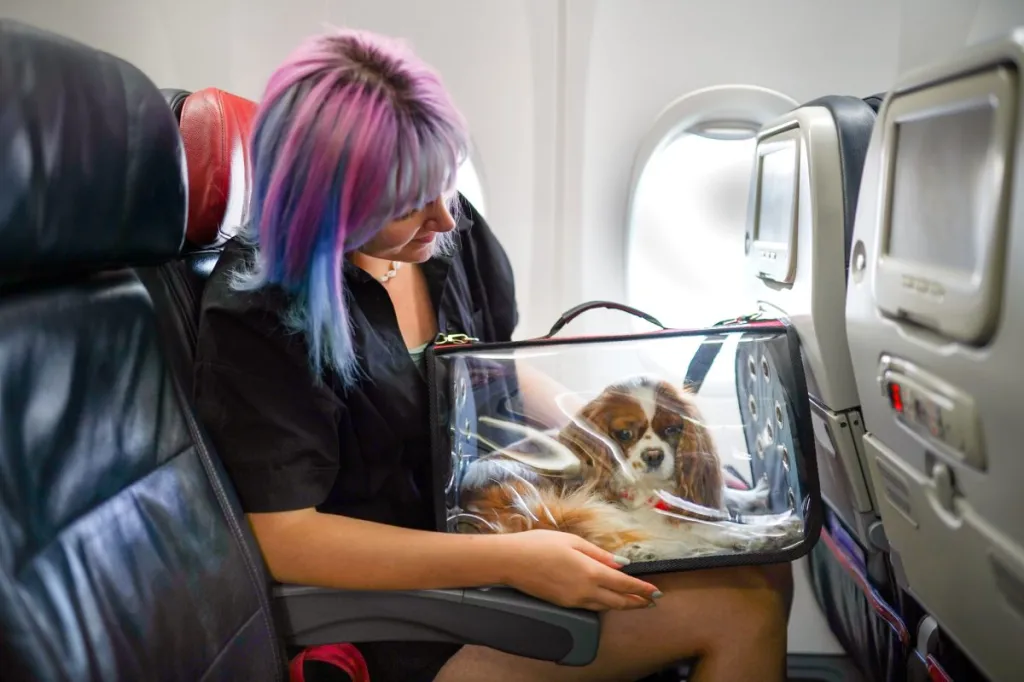
- Your dog’s age and size determine where they sit. U.S. airlines may allow you to carry small pets at least 8 weeks old in the cabin for a fee. Dogs must be in an approved carrier (ask the airline for its recommendations) and fit under the seat in front of you. For most airlines, this will count as your one piece of carry-on luggage. Some airlines limit your canine passenger’s weight to 15 to 20 pounds.
- Short-nosed dogs need special consideration. Some airlines have special restrictions for dogs, like Pugs or Bulldogs, who have more trouble breathing in certain conditions.
- Weather matters. Many airlines won’t take pets during hot or cold spells. This is because the risk is just too high that your dog may die if the plane waits too long on the tarmac.
- Book a direct flight when possible. This will cut down on the chance that your dog will get stuck in a holding area or be left sitting on the tarmac while cargo transfers from one plane to another.
- Book ahead. Most airlines limit the number of pets they’ll take per flight.
- Get a checkup and a health certificate from your veterinarian. Most, if not all, airlines require a health certificate issued within 10 days before you fly. Getting one is also a good idea to ensure your dog is healthy enough for the trip. You’ll also need proof of a rabies vaccine.
- Make sure your dog is wearing a collar with an identification tag. Attach your destination information as well, either by making an extra tag or securely taping a packet of information onto the collar.
- Talk with your vet about the pros and cons of giving your dog a sedative. Sedation can cause nausea. Also, the pressure of increased altitude could create respiratory or cardiovascular problems in dogs under sedation, even if the dog is in the main cabin. Still, if you’ve got an anxious dog, those risks may well be offset by the chance to help them feel a little calmer about the flight.
Preparation is key
Careful preparation is vital in making the airplane ride a smoother one for you and your dog. Consider worst-case scenarios, such as your dog getting lost en route, and be sure you know all of the airline’s requirements for your traveling dog. Be sure you understand all of the costs and risks of flying your pup before you takeoff.