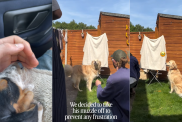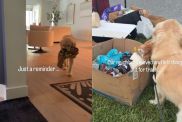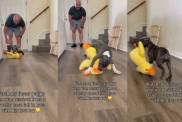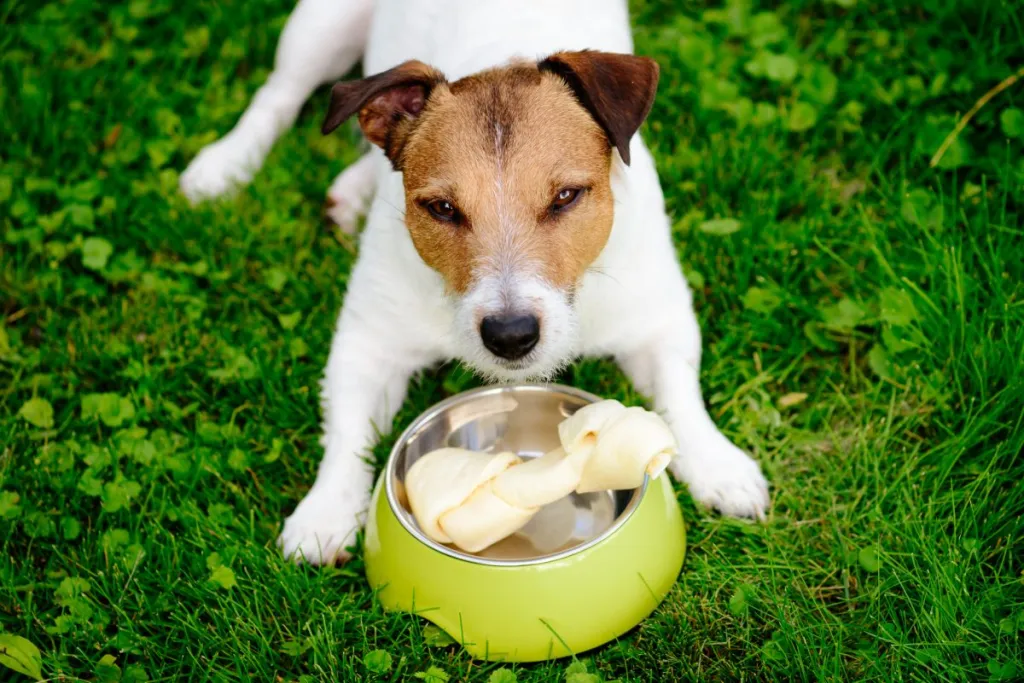
Resource guarding is when a dog aggressively protects something precious to them, most commonly food, toys, or a favorite spot in the house (such as their bed). It’s triggered when a person or animal gets so close that the dog feels they’re in danger of losing this valuable resource. Think of the Cocker Spaniel who growls as you approach their bowl of kibble or the Labrador Retriever who snaps if you reach for their chew toy. Growling, lip curling, snarling, direct eye contact, and freezing in place are all signs that a dog will snap or bite if pushed past the point they can tolerate.
Causes of resource guarding
The reason dogs guard their resources is very straightforward: they don’t want to lose something valuable. Part of this is instinctual; in the wild, protecting one’s hard-won food was very important. But the behavior can also be learned. A dog’s perspective might be: “The last time I let that tennis ball out of my sight, it was taken away. I’d better not let anyone near it!”
How to treat the problem
Note: Working on an existing guarding problem can be dangerous. To avoid getting bitten, don’t do any of these exercises without the guidance of a skilled dog behaviorist or trainer.
In most cases, desensitization is the preferred way to treat resource guarding. Whether it’s their food bowl, a tennis ball, or the chair by the window, the idea is to create positive associations between the resource and the approach of a person (or people).
Physically punishing, scolding, or taking away the food or toy does not work. These techniques only reinforce the idea that your dog needs to be aggressive in order to protect their resource.
To treat food guarding
- Start the desensitization process at mealtime.
- Keep a safe distance. “Safe” means the distance you must remain from your dog in order for them not to demonstrate any guarding behavior. Offer them a treat they find utterly irresistible. (The rule is that the treat must be something much more exciting than the kibble they’re having for dinner.)
- Allow them to take the treat and return to their meal.
- Repeat this exercise over the course of many meals, gradually moving closer and closer to their food bowl. Approach from different angles and vary the treats your dog receives, and keep at it until you can casually meander right up to their food bowl and drop in a treat without any aggressive displays whatsoever.
To treat object guarding
Begin when your dog is playing with something that you know they’re not completely crazy about. The key is don’t start by using their favorite toy.
- With one hand, pick up the toy.
- At the same time, with your other hand, produce a treat from behind your back. In order to enjoy the treat, they must release the toy.
- Return their toy to them after finishing the treat.
- Repeat this exercise over many sessions, varying your path of approach, the type of reward you give, and the toy your dog is playing with. Always replace their toy with a treat or toy of a higher value, thereby teaching your dog that giving up something good results in getting something better.
To treat location guarding
- Approach your dog’s bed (or whatever spot they guard) with a high-value treat that they can smell as you get nearer.
- Give your dog the treat while they’re still on the bed. The idea is that they’ll start associating something positive (the treat) with a person approaching them in their special spot.
- Over the course of days and weeks, vary the angle at which you approach as well as the types of treats you offer.
- Eventually, as your dog becomes more at ease, practice luring them away from their bed by using the most desirable and delicious treats.
All of these exercises usually take weeks. Desensitization doesn’t happen over the course of just a few sessions.
How to prevent the problem
The key is to start when your dog is a puppy, so they learn early on that you control the resources. Teach the commands “off” and “leave it” and always reward your dog with something more valuable than what you’re asking them to relinquish. Think of it as preemptive desensitization: even if your dog is in the middle of dinner or chewing on their favorite toy, your dog learns that great things happen when people approach. They have nothing to worry about because their prized resources aren’t going anywhere.
In addition, spay or neuter your dog. It makes for an all-around mellower pet, and it helps reduce aggressive guarding behavior.
Resource guarding is born out of the desire to protect such valuable resources as food and toys. Through systematic desensitization, you can safely teach your dog to be comfortable and relaxed around those resources, even in the presence of humans.