Many adult rescue dogs come with imperfect housetraining skills – or none at all. Even dogs who were potty trained in their previous homes sometimes need a refresher course if they didn’t get regular walks at the shelter.
The good news is it’s fairly easy to teach an old dog this new trick. In fact, adult dogs are usually easier and faster to housetrain than puppies, especially if you use a crate.
The key to rock-solid potty training is to start the day your dog comes home. If you stick closely to a routine, you should be able to housetrain an adult dog within a week or less. However, some pups need a bit more patience, and that’s OK, too.
Take time off to housetrain your dog properly
When you first bring home your adult dog, they’ll need to go out for midday bathroom breaks.
If you have work or other obligations that prevent you from taking your dog on a midday potty break, hire a dog walker. The first week or so is crucial in setting a new routine for your dog, and you want to avoid as many preventable indoor accidents as possible.
If hiring a dog walker is not in your budget, ask a friend or neighbor to let out your dog in exchange for another service or favor.
Start using a crate the day you bring them home
Crate training is the easiest way to teach a dog bladder and bowel control. That’s because dogs don’t like to soil their sleeping and eating areas.
The crate should be big enough for your dog to stand up, turn around, and lie down in comfortably, but no bigger. If it’s too spacious, your dog may feel like they can eliminate in one corner and still keep their living space clean. Keep the crate in a high-traffic part of the house, so your dog won’t feel isolated.
Also, make sure to give your dog lots of time outside the crate for exercise, training, and just hanging out and bonding with you. If you keep them in their crate too long, they’ll feel trapped and frustrated.
If you’re worried about putting your dog in a crate, rest assured you won’t have to use it very long. Adult dogs can be fully housetrained in as little as three days. Most dogs actually enjoy having a safe, closed-off space for themselves to rest and recharge. Don’t worry too much about them feeling confined.
They may even prefer to lie down there during the day, even when they no longer have to.
How to streamline housetraining adult dogs
When using a crate to housetrain your dog, follow these guidelines. They ensure your dog won’t suffer from anxiety or eliminate in their crate. These steps will also help your dog understand what you want – for them to eliminate outside. Once they realize that, they’ll stick to it.
- Never confine your dog longer than they can hold it. You don’t want your dog to feel forced to go in their crate because you didn’t let them out in time.
- Use the same “elimination station” each time. Dogs develop a preference for going potty in the same spots. Make it easier and choose, from the start, the place where you want them to go.
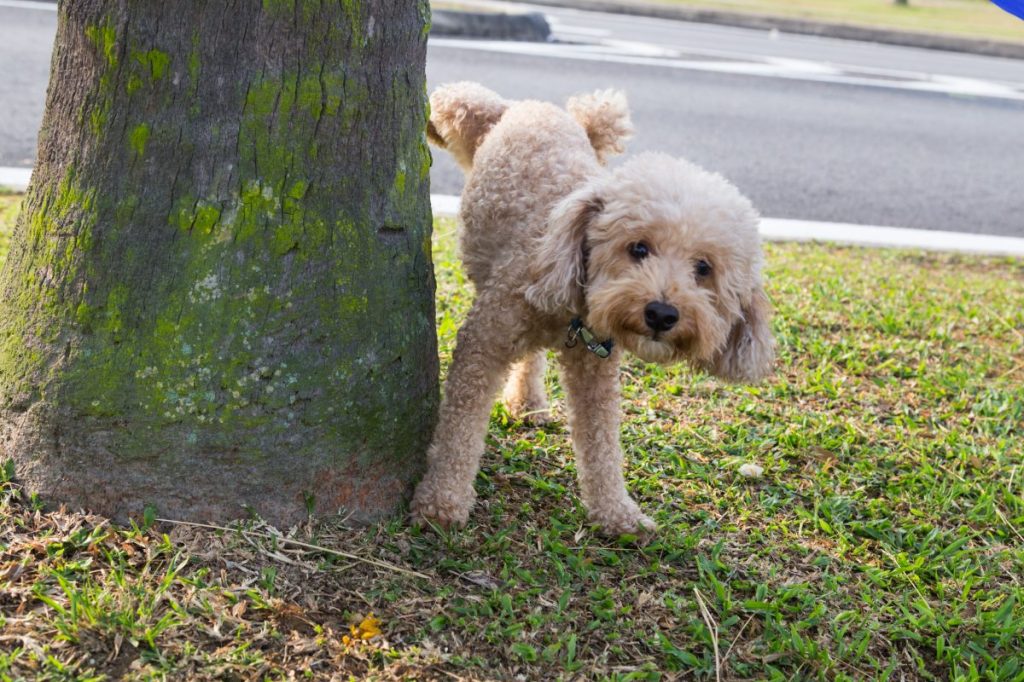
- Don’t distract your dog with games and talk. Just stand still and let them circle and sniff. As soon as your pup begins to go, give a command, such as, “Go pee” or “Do your business.” Before long, your dog will eliminate on cue. This comes in handy when you’re traveling or don’t want to spend walks carrying bags of poop.
- Shower them with praise when they do it right. Make sure treats and praise come right after they finish eliminating. Make praise enthusiastic and treats top-notch. You want to make it crystal clear that eliminating outside is a great thing. Don’t wait to get back to the house to give a treat. If you do, your dog won’t connect the reward with what prompted it.
- Don’t punish your dog for accidents if you haven’t caught them in the act. Clean up thoroughly so they’re not drawn to the same place by the smell of residual poop or urine. If you catch your dog having an accident, startle them midstream with a shout or clap. Then, hustle them outside to finish. Praise them when they’re done so they learn that eliminating outside isn’t just allowed, it’s rewarded.
Give your dog at least six bathroom breaks daily
You won’t always have to give your dog as many opportunities to use the bathroom. But until you have finished housetraining, you need to give your dog as many opportunities as possible to eliminate outside.
Aim to take out your dog:
- First thing in the morning
- Before you leave for the day
- Twice during the day
- Once after dinner
- One more time before going to bed.
Once you know they’ve got it, you can move them to four bathroom breaks a day — the standard for adult dogs.
Also, take your dog for a walk or give them some playtime as a bonus reward. If they always come straight back inside after eliminating, they’ll learn to hold it to prolong their time outdoors.
What cleaning products to use in case your dog has an accident
There will inevitably be an accident here or there while housetraining, no matter how closely you stick to a training routine. In the instance your dog has an accident inside, stick to these rules when picking out a cleaning product.
- Use a cleaning product that contains live bacteria or enzymes that break down the mess, rather than masking it with another fragrance.
- Stay away from ammonia-based cleaners. They’ll smell like urine to your dog, and they’ll want to pee again in the same spot.
- Leave some soiled towels in your dog’s “elimination station.” The scent reinforces for your dog that this is the potty area.
Stick with your training routine, and your adult dog should be doing their business where they’re supposed to in no time. Good luck!