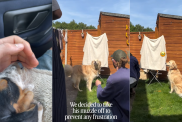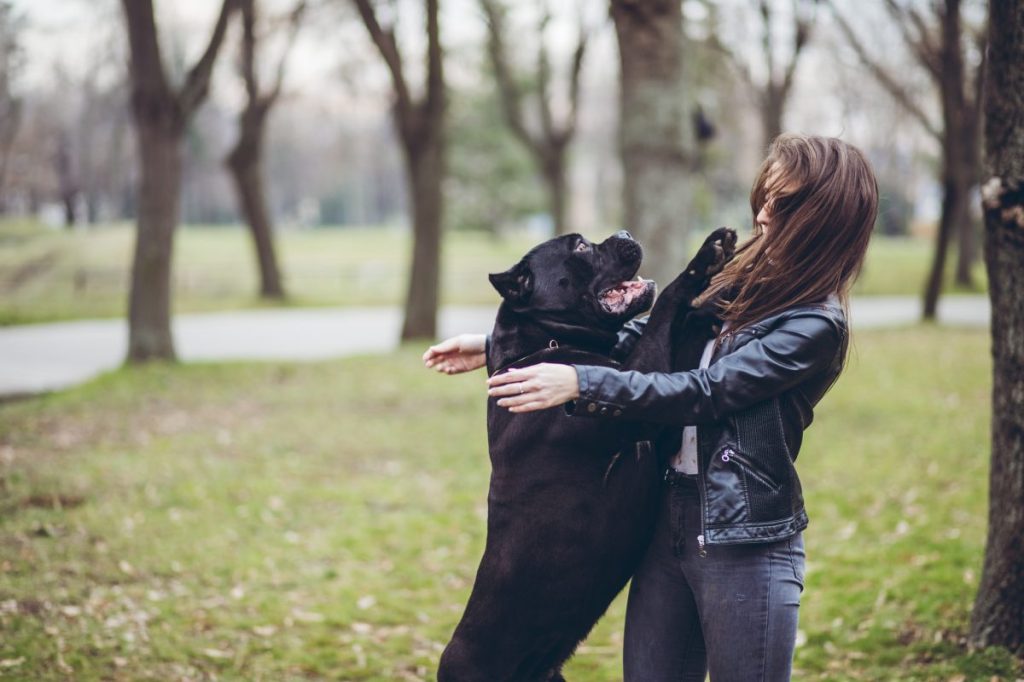
An innate canine impulse, jumping up serves two purposes for dogs. First, it’s a way to show excitement. Second, it allows for an up close and personal sniff of scent glands in the human face. Combine the two — your pup’s excited you’re home from work and craves a whiff of your natural aroma — and the result is one jumpy dog.
Causes of Jumping Up
As puppies, our pets are encouraged to get right in our faces. They put their paws on our shoulders and lick our noses. We make it easy by getting down on the floor with them and praising their exuberant displays of affection. Pups quickly learn that jumping all over us is fun and rewarding. We reinforce this behavior because it’s fun and rewarding for us, too. But what’s adorable in a 10-pound puppy isn’t so cute in a 70-pound adult dog. Therefore, it’s important to begin teaching your pup to keep “four on the floor” as early as possible.
Solutions
The goal is to teach your dog that jumping won’t lead to what they want. In fact, jumping up will decrease their chances of getting it. So whether they’re hoping for a sniff of your forehead, showing excitement about an impending walk, or attempting to snap a treat out of your hand, jumping up must unfailingly result in the absence of the desired target.
When your dog jumps up, hug your chest and turn away from them so they don’t have access to your arms and face. If they keep jumping, tell them, “Off!” in a low, stern voice. Then ask them for what you do want: “Sit.” When your dog complies, softly stroke and praise them. Take care to use soothing tones and slow movements so as not to incite more jumping.
If your dog is constantly jumping up, the good news is that you’ll have many opportunities to train the behavior out of them. If jumping is limited to certain occasions — for example, when you return home from work — practice a polite greeting. A few times a day, leave the house for a minute or two so that they can practice greeting you each time you come back.
Consistency is crucial. If you don’t want your dog jumping on you when you walk in from work in your business clothes, don’t allow it when you come in from the garden in your dirty overalls. Until there are “four on the floor,” they don’t get to greet you, the door doesn’t open for a walk, and the treat isn’t placed in their bowl.
Prevention
Start early by making sure you’re not rewarding your puppy for jumping. Encourage them to chase tennis balls, roll over for belly rubs, and do all the things that are appropriate for puppies to do. But refrain from giving treats, praise, or any other kind of attention when they jump. Request that guests (or anyone who comes in contact with your pup) do the same.
If you have an adult dog, you can still set them up for success by greeting them at their level. When you walk in the door, bend down to greet your dog and speak to them in calm, soothing tones. Place treats on the floor (as opposed to holding them above your dog’s head) so their attention is immediately focused downward rather than upward.
Jumping up is so instinctual — and so often tolerated — that it will probably take several weeks to cure your dog of the habit. To reduce it, hone your dog’s impulse control (through general obedience training) and clearly let them know what behavior you expect from them.