Decades ago, veterinarians believed that pain helped keep dogs quiet so they could heal faster. In addition, the prevailing thought was that there wasn’t any accurate way to know whether a dog was feeling pain or needed relief. Today’s veterinarians have ushered in a new way of looking at pain management for your four-legged friend. Many vets now claim that they administer pain medication until there is proof that a dog isn’t hurting.
Why it’s important to manage your dog’s pain
Veterinary medicine has made pain management a top priority. Organizations such as the University of Tennessee College of Veterinary Medicine Center for the Management of Animal Pain, the Colorado State University College of Veterinary Medicine, the Humane Society of the United States, and the Companion Animal Pain Management Consortium are devoting a lot of time and resources to study pain and pain management in animals. These studies have shown that pain relief may be able to speed the recovery process, whether from surgery or injury. Most importantly, pain relief may help your dog live longer because it reduces stress and increases her sense of well-being.
Acute pain is a sudden onslaught as a result of an injury, surgery, or infection and can make your dog extremely uncomfortable and possibly limit her mobility. This pain seldom lingers, usually disappearing when the condition that caused it is treated.
Chronic pain usually develops slowly and is long lasting. Common sources of chronic pain are age-related disorders such as arthritis, but it can also be caused by illnesses such as cancer or bone disease. This pain is the hardest to deal with because it can go on for years, sometimes even for the rest of the dog’s life. And because it develops slowly, some dogs learn to tolerate the pain and live with it, making detection difficult.
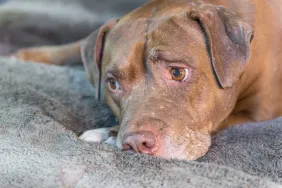
Since dogs can’t tell us in words that they hurt, it’s important that you watch them closely if you detect any change in their behavior. Your dog may be in pain if she:
- is unusually quiet, listless, restless, or unresponsive
- whines, whimpers or howls for no discernable reason
- bites or snaps
- continually licks a particular part of her body
- acts funny or out of character, either aggressively or submissively
- flattens her ears against her head
- has trouble sleeping or eating
- seeks a lot more affection than usual
If you suspect your dog is in pain, talk to your veterinarian, who can help you pinpoint the problem and discuss available options. Your vet will need to know about your dog’s behavior, activity level, and tolerance for being handled as well as recent changes in her mobility, such as trouble negotiating stairs (if it was never a problem before), or problems getting up or jumping on and off furniture.
Some dogs don’t show signs of pain, but that doesn’t mean they aren’t feeling it. If the injury, illness, or incident sounds painful to you, assume that your dog is in pain and get her to your veterinarian.
What you can do to help
The first and most important thing to do is to get you dog a complete physical exam by your veterinarian, including lab and blood tests or X rays if needed. Veterinarians usually recommend physical therapy, drug treatment, or surgery or a combination of any or all. There are simple things you can do at home to help keep your dog comfortable and to monitor her pain level. (Check with your veterinarian first to make sure these won’t harm your dog.)
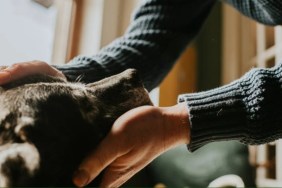
- A head-to-toe massage will help relax and soothe her. This organized form of petting helps you to bond with your dog and gives you a chance to find any unusual bumps, scrapes, or bruises on her body.
- Watch you dog’s response to exercise. If she begins acting sluggish during normal exercise, you may need to reduce her activity, or it could mean that chronic pain is developing. Do not begin a new exercise regime without getting a thorough physical and discussing the changes with her veterinarian.
- Monitor her diet carefully. If her appetite decreases or accelerates for no obvious reason, consult your veterinarian who will advise you if you need to make any dietary changes. A proper diet is essential to help her maintain her weight, regularity, and physical health. In addition, some illnesses require a special diet. Don’t let your dog overeat and don’t over-treat her.
Treatment choices and considerations
The standard form of pain treatment is medication. Today’s medications come in pill form as well as liquids, skin patches or gels. There are new analgesic products to help treat your dog after an injurious trauma or to help control chronic pain.
Steroids are the traditional treatment for anti-inflammatory purposes and for pain relief, but prolonged use can have adverse side effects and it is crucial that you follow your veterinarian’s dispensing instructions to the letter. Newer, non-steroidal anti-inflammatory drugs (NSAIDS) are now often used to treat orthopedic-related pain with fewer side effects.
Do not try to medicate your dog yourself. Some human-safe painkillers or combinations of medications can be toxic to dogs even in very small doses. Never give your dog any medication without consulting your veterinarian.
Besides standard pharmaceutical treatment, complementary (or alternative) options are now available. You can now get acupuncture, homeopathy, holistic medicine, and even aromatherapy for your dog. Consult your veterinarian to help you decide whether complementary medicine would be helpful for your dog and to find the right practitioner. Make sure that the alternative practitioner and your regular veterinarian stay in contact regarding your dog’s treatment.
Whether you choose complementary or traditional medical practices, you should take into account the possible side effects and the amount of time necessary for each treatment option to show results. Your veterinarian will be able discuss costs, benefits, and risks of the various treatment options. The best treatment is the one that’s personalized for your dog and you.
After surgery
Pain management after surgery is particularly important. When recovering from invasive procedures, your dog is not only in pain, but weak and disoriented. When you bring her home after a procedure, you need to follow your veterinarian’s instructions carefully and consistently. If your vet prescribes an analgesic for your dog, give it to her as directed. If any problems develop, contact your veterinarian immediately.
Have a soft, warm bed ready for her, near enough that you can keep an eye on her, but out of the hustle and bustle of daily life so she can rest, stay quiet, and feel safe and secure. Don’t let her pick at her sutures. If necessary, ask for an Elizabethan or e-collar so she can’t reach her sutures. Be attentive and loving. Your love and attention are some of the best medicine she can receive.
As with any medical condition, your veterinarian is your best ally in identifying and managing your pet’s pain. Pain management requires a team effort, but the end result, a happier and healthier dog, is well worth it.
Source: Adapted from the American Animal Hospital Association