“Parvo” is a word most puppy parents learn — and learn to dread. It’s short for canine parvovirus, the most common infectious dog disease in the US.
Even though it’s a relatively new disease in the dog world, parvo is ubiquitous — present at high levels in every environment, from home to kennel to park. In fact, trying to shield a puppy from exposure is considered completely futile in this day and age.
It’s a ridiculously tough virus that can survive for months on living things, and even on objects such as furniture, toys, and carpets. It’s a serious disease, too: it can kill in a matter of days, and it’s 80 percent fatal.
Puppies under six months old and senior dogs are the most vulnerable. Luckily, a simple vaccine is all it takes to prevent this horrible disease. You must consult your vet if your dog hasn’t received the vaccine or if your pet shows symptoms of the disease.
Here’s what you should know about the symptoms, causes, and treatments of parvovirus in dogs.
Symptoms Of Parvovirus In Dogs
It’s possible for adult dogs to have a mild form of parvo and show no symptoms at all.
In its acute phase, however, symptoms include:
- Loss of appetite
- Depression
- Fever
- Severe dehydration
- Lethargy
- Bloody diarrhea
- Severe, repeated vomiting
The disease can kill a dog quite quickly — sometimes in a matter of days — and it may leave surviving animals with intestinal and heart damage. So if you see symptoms or even suspect parvo, get to your vet immediately.
The only way to know for sure if a dog has parvovirus is through a diagnostic test.
Causes Of Parvovirus In Dogs
Parvo is actually a family of viruses. Many mammals have some version of it, including humans. Fortunately, however, parvo doesn’t pass from species to species; each type of animal gets its own special version.
The virus was first isolated back in the 1960s, but a mutant form called CPV-2 appeared virtually overnight in 1978. Then a mutation of that showed up in 1979, causing a true health crisis in the canine world — an epidemic that killed thousands of pets and triggered a vaccine shortage.
Today that virus has been supplanted by a version called CPV-2b, but because of vaccination for puppies and tight health controls, there are very few cases of adult parvo; it’s considered a “puppy disease.”
Still, it’s very serious: dogs catch parvo and die from it every year. There’s some talk of other strains beginning to emerge.
The virus itself is deceptively simple: just a single strand of DNA, without the usual sheath of fat to protect it. This, ironically, makes it harder to kill with standard disinfectants and allows it to survive outside a host body for as long as five months.
Parvo is usually spread from dog to dog by direct contact — in parks, dog shows, kennels, pet shops, and the like — or by contact with infected feces. People can contribute to the spread of the disease by tracking fecal matter on their shoes.
Since the virus can survive a wide range of temperatures and live outside the animal for months, it’s extremely tough to eradicate. That’s why vaccination is so important.
Prevention & Veterinary Treatments
The best time to see the vet about parvovirus is when you get your puppy vaccinated. However, the timing of protecting your puppy can be a little tricky. The mild and temporary immunities that the mother passes on to her pups can actually interfere with the vaccine’s effectiveness.
Exactly when those maternal antibodies fade varies from dog to dog, depending on factors such as nutrition, medical history, and even breed. It’s that window of time after the mother’s immunity has faded and before the vaccine has kicked in when puppies catch this ever-present virus.
That’s why puppy vaccines have to come in at least two stages, and why it’s vitally important that you don’t skip that second visit to the vet.
It’s also important to not let your dog walk on the ground where infected dogs may have been until the vaccine has fully kicked in. Ask your vet when it’s safe to take your pup out and about.
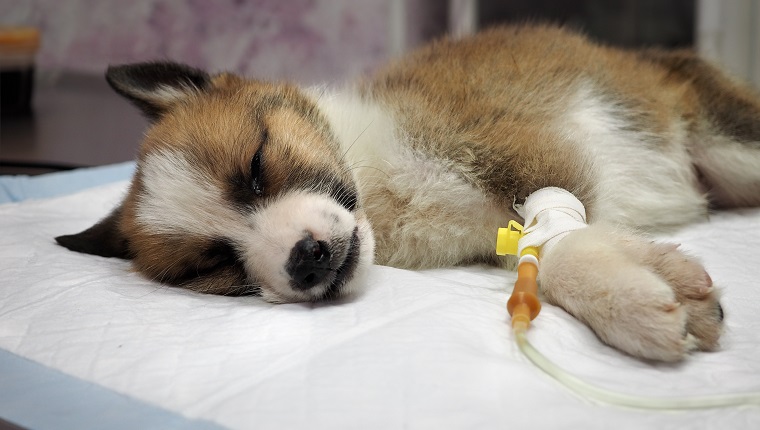
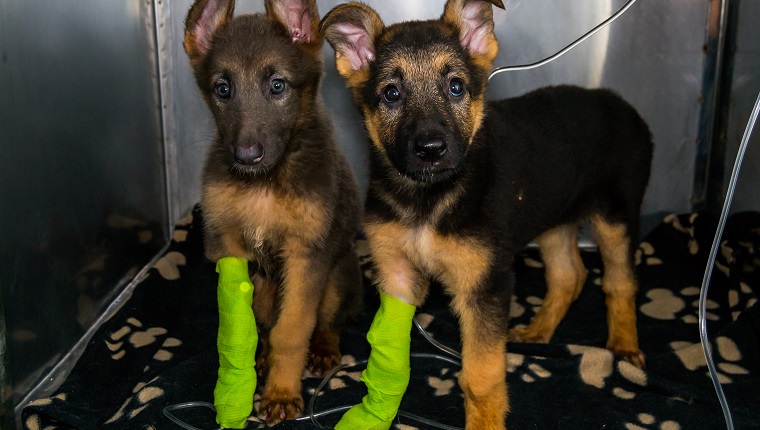
For dogs who do catch the disease, treatment generally means a lengthy and expensive hospital stay, with at least five to seven days in intensive care, re-hydration through an IV, lots of antibiotics, and medications to control nausea.
Many severely infected animals die, even with the best available care. Without the correct amount of properly balanced intravenous fluids, their chance of recovery is very small. The prognosis improves with proper care and early detection.
Beating parvo is a difficult challenge, even for the toughest of puppies.
Infected dogs must remain in isolation to prevent spreading the disease, and any objects or surfaces they touch must be washed thoroughly.
Is your dog vaccinated against parvo? How do you keep your dog happy and healthy? Let us know in the comments below!