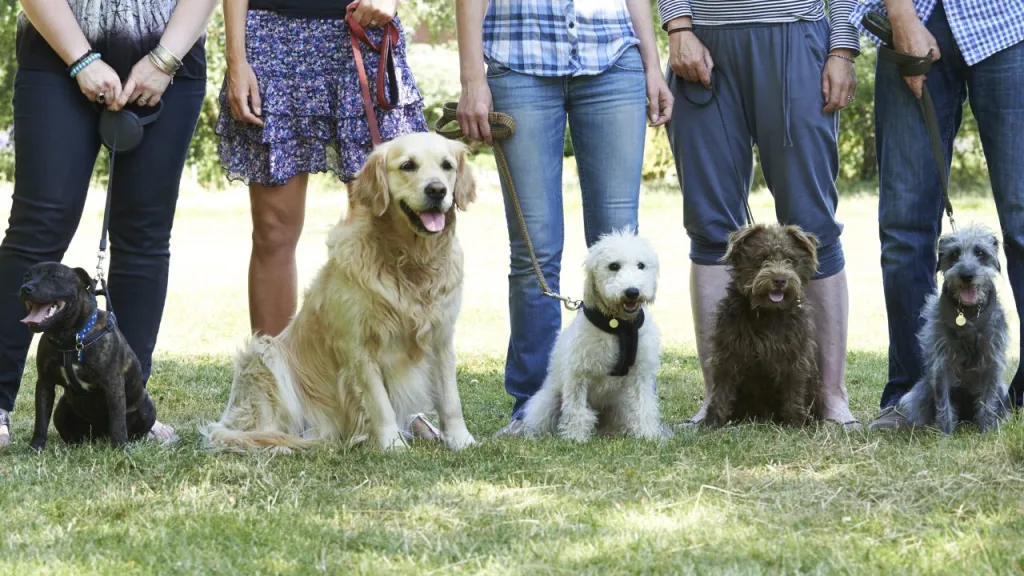
It’s a sad fact that many of the behaviors that lead to so many dogs being left in shelters — house-soiling, chewing, barking, and the like — are completely preventable and often treatable. All that’s needed is some time and a commitment from you to teach your dog good canine manners. Dog training classes are one of the best ways for owners to learn how to do just that.
The benefits of dog training classes
Live classes are a great way to get your dog the help they need. Unlike books or videos, live classes also give you an opportunity to work with a trainer in person — helping to spot problem behaviors and provide immediate advice. Training classes are also a chance for your dog to get comfortable around people and other dogs. This is especially important for raising a safe, friendly puppy. It also helps you learn how your dog communicates, and how you can better communicate with them. And most importantly, it’s a way for you and your dog to bond.
How to find a training class
The best way to find a class is through word of mouth. Ask your vet, the breeder or shelter where you got your dog, the local humane society, as well as pet parents in your neighborhood for recommendations. If you spot a dog at the park with stellar obedience skills, ask if they went to a local class. You can also search for trainers in your area online. Look for trainers that are credentialed, such as through the IAABC or other accredited programs.
Signs of a good dog training class
If you’re unsure if a class is right for you and your dog, ask if you can sit in on a class and watch the instructor in action. There are a few things you should look out for when determining if the trainer will be a good match.
First, the trainer uses treats, praise, and games to teach. Positive reinforcement methods are considered more effective, and more humane. They convince your dog to want to work with you, rather than be fearful of you. Next, see if the trainer gives time for supervised off-leash play. This can help with socialization skills — especially in younger puppies — and can help with impulse control and bite inhibition. You should also make sure the class requires proof of vaccination for all dogs. Otherwise, your dog’s at risk of catching a doggy disease.
Next, see if there’s a cap on the number of students. Any more than about 15 dogs, and you’ll have a hard time getting any one-on-one attention and feedback. A good instructor will spend part of the class going around the room while the human/dog pairs are practicing, in order to offer guidance and feedback. The group classes should also be separated by level and the age of the dog. Expect separate classes for puppies and adult dogs, and for different levels of obedience training.
Finally, ensure the training space is clean, orderly, and large enough to give the dogs some “personal space.” Cramming dogs into a small room together can make them over-excited or stressed. When teaching, the trainer should clearly demonstrate and explain the exercises. And, the mood in the class should be upbeat, with the other students — both human and canine — looking like they’re having a good time.
When to go for private training instead
You may not get much one-on-one attention from the trainer in a group class, especially if it’s very large. If you have a specific problem you want to work on you may be better off with private sessions. Private sessions are also better for dogs that are shy or fearful around others. Dogs experiencing a specific issue, such as resource guarding, may also be better off in private lessons. Private training can also work better if you have a hectic schedule and have a hard time making it to every group class.
Dog training classes are a great way for most pet parents to teach their dogs how to be friendly and well-behaved. With the right research, you can ensure your dog has a positive, fun experience.
Want to learn more about training? Check out the differences between trainers and behaviorists. And, learn some top techniques to help your dog stay well-behaved.