Colitis is a general term that refers to a variety of afflictions of the colon (also called the large intestine). It’s responsible for some 50 percent of cases of chronic diarrhea in dogs, and while it doesn’t demand a trip to the emergency room, it certainly requires the input of your vet.
The colon is the final part of the digestive tract. Its main function is the reabsorption of water to reduce the volume of fecal matter. It’s also involved in the final bacterial breakdown of digested food coming through the intestinal tract, and the production of certain vitamins.
A colon that doesn’t work properly can wreak havoc with the digestive system. In colitis, it becomes inflamed. This can lead to painful and frequent trips to the backyard for your dog, often to pass watery, bloody stool. And, like many conditions that frustrate an easy diagnosis, colitis can also have the opposite effect and cause constipation.
Causes
There are many causes of colitis, but a few make up the majority of cases seen by vets.
- Chronic Inflammatory Bowel Disease: This is a group of diseases of the small and large intestines. In each case, the dog’s immune system, reacting to an allergen, attacks the lining of the intestine. Although treatable, it’s seldom curable.
- Foreign bodies: Grass and straw contains lots of indigestible fiber that can irritate the colon. Dogs that eat any nonfood material are always at risk of suffering from periodic bouts of colitis.
- Parasites: Whipworms are intestinal parasites that live in the upper colon and grow to two to three inches long. A few whipworms rarely cause a problem, but as they multiply they can trigger diarrhea and bloody stool. Other parasites in different parts of the digestive tract can usually be treated readily with medicine, but whipworms can be difficult to eradicate, and a multistep deworming process is usually necessary.
- Irritable Bowel Syndrome: Most commonly found in stressed or highly excitable dogs, this condition typically has a neurological or psychological cause.
When it’s time to see a vet
If your dog is showing any of these signs, a trip to the vet is in order:
- Painful defecation
- Prolonged squatting and straining
- Intermittent constipation
- Frequent need to defecate
- Passing small, watery stool, often with blood and mucus
- Passing gas
What’s next
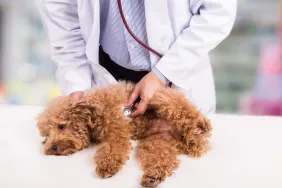
To diagnose colitis, the vet will perform a colonoscopy and a colon biopsy, in addition to checking stool samples for fungi and parasites. Based on the diagnosis, your vet will recommend treatments that may include diet changes, drugs to kill parasites, or other medications and approaches. Because colitis has such a large number of causes, it’s not advisable to try diet modifications without consulting your veterinarian.
How to prevent colitis
You can’t prevent every cause of colitis–sometimes it’s just out of your control. You can, however, be sure your dog gets a high-fiber diet and plenty of water. Also, try to keep him from eating any nonfood materials. Grass, fabric, and table-scrap bones all are very hard on the digestive system and can trigger problems.